Tuesday, February 7, 2012

Looking up at Bolla


During my most recent trip to Verona, I visited Bolla at their headquarters in Pedemonte in the heart of the Valpolicella Classico zone. I imagine that everyone - Italian wine lover or not - must know this name and has probably tasted at least one of their moderately priced Veronese wines (Soave, Valpolicella or Bardolino) at some point. 

Chances are you don't give much thought to Bolla, at least if you consider yourself a "serious" wine drinker. I must admit that I rarely consider their products when writing about Italian wines. So it was nice that I had the chance to make this recent visit with a group of journalists to taste the latest releases.

I've found that it's best to go into these tastings with an open mind, which is exactly what I did. And you know what? I found myself liking these wines; the Bolla products are clean, well made and balanced. Are they great wines? Of course not, but they're not trying to make great wines. What Bolla is doing is producing everyday wines at reasonable prices for a large spectrum of the wine market and they're doing it very well.


Unless you've never tasted wine in your life, you must surely know that Bolla makes Soave. Indeed this association is so strong that during the 1980s in America, people thought "Soave Bolla" was one word. Millions of cases were sold and it was one of the first Italian wine phenomenons in this country. Soave took a hit for many years, but Bolla has continued to stick with their bread and butter. The 2010 Classico - emblazoned with a "retro" label from the 1970s (nice touch) - is a clean, fresh version with typical honeydew melon fruit. It's got good, but not overwhelmingly high acidity. For $9, you get your money's worth.

A step up is the Soave Classico named "Tufaie" (too-fye). This blend of 90% Garganega with 10% Trebbiano di Soave is a selection of some of the best grapes the winery receives from their growers. There is a little touch of honey in the aromas - this coming from the Trebbiano - that adds to the complexity and overall pleasure of this wine. Medium-bodied, it has good acidity and a nice texture on the palate along with more persistence in the finish. At $13, this is a very nice bottle of Soave Classico.


As for the value reds, the "Le Poiane" Valpolicella Classico Superiore is worth your attention. As you can see from the label, this is a ripasso wine, meaning this is a Valpolicella that is fermented at some point with the musts of Amarone, which increases color as well as spice. Ripasso, being much less expensive than Amarone, which has a strict production process, has become very popular in America these days, as it's richer than a Valpolicella normale, giving meaning to its description as a "baby Amarone." I don't really buy into that belief, but it does offer more than a typical Valpolicella. 

This Bolla version has red plum and morel cherry fruit, very good acidity and distinct notes of black spice in the finish. It's a cleanly made wine with good Ripasso character and while it's not terribly complex, it is nicely balanced and in reality, a fine introduction to what Ripasso is all about. For $15, this is a well made wine (the 2009 was the vintage I tried at the winery).

Bolla is credited with creating the first Amarone back in the early 1950s and they've always made a typical bottling. I tasted the 2008 Amarone and it's a nice representation of this wine, with red and brown spice notes on the nose and in the finish along with red cherry and currant fruit, good concentration and medium-weight tannins. At $42, this is a fair price for a nicely made Amarone such as this, though I'd like a bit more depth of fruit overall along with better persistence in the finish.

Bolla is now owned by Gruppo Italiano Vini (G.I.V.), a company that owns more than a dozen wineries throughout Italy from north to south. They have continued the everyday work that goes on here, the emphasis of which is producing everyday white and red Veronese wines. My hope is that they can introduce a few special projects, perhaps focusing on some limited releases, perhaps for restaurants only. We all know what Bolla can do - it would be fascinating to see what they can realize.


The wines are Bolla are imported into the United States by Banfi Vinters.

Saturday, February 4, 2012

Slow Wine Highlights

Susanna Galandrino, La Gironda and Fabio Giavedoni, Slow Wine


The Slow Wine tasting came to Chicago the other day after a quick stop in New York City; showcasing a wide array of producers from the width and breadth of Italy, this was a first-rate event. 

The tastings are the result of the Slow Wine Guide which is published by the Slow Food organization located in the small town of Bra in the northern Italian region of Piemonte. The guide was first published in 2011 in Italian and now with the 2012 guide there is also an English version.

There are several important guidebooks about Italian wines published each year - most are in Italian for the local market, but a few are also released in English. The Slow Wine guide focuses on three points: the best wines and producers, the best value wines (something more guides should take time exploring- good for Slow Wine) and also for producers that incorporate Slow Food values, such as territory, environment and sensory perception.


Elisabetta Fagiuoli, Montenidoli, San Gimignano


Thus you had a nice mix of producers at this event, ranging from the icons of Italian wine, such as Paolo De Marchi of Isole e Olena and Elisabetta Fagiuoli of Montenidoli to lesser-known, but first-rate producers such as La Gironda from Asti, Marotti Campi of Marche and Rosa di Golfo from Puglia. It was also nice to see that certain producers poured their best wine as well as an everyday wine. A great example was presented by De Marchi who poured his Super Tuscan named Cepparello as well as his 2009 Chianti Classico normale, a wine I listed as among the finest Italian red wines from last year and one that is given the highest honors in the Slow Wine guide.


Angiolina Piotti Velenosi, Marche


A few highlights from the tasting, starting with the values. The 2010 Velenosi Lacrima di Morro d'Alba is intensely fruity and a wonderful expression of this indigenous variety of Marche - think blackberry and black raspberry fruit and very soft tannins. The 2009 Lacrima Riserva "Orgiolo" from Marotti Campi was just as delightful, its vibrant fruit settling down after an additional year in the bottle. 

The 2009 San Lorenzo Montepulciano d'Abruzzo "Antares" is a marvelous wine at a reasonable price. Medium-bodied, it's full of tasty black plum and black raspberry fruit with an elegant finish. A gorgeous value white is the 2010 Villa Bucci Verdicchio dei Castelli di Jesi, with its appealing pear and melon fruit and its lively acidity.

As for the top wines, there were so many wonderful options starting with the 2008 Grattamacco Bolgheri Superiore, a wine of such impressive breeding, elegance and complexity; one that combines great power with finesse and amazing varietal purity. Among the most notable examples of Barolo at the tasting were the 2007 Cannubi from Luigi Einaudi, a wine of considerable grace as well as the 2007 San Lorenzo from Fratelli Alessandria, a beautifully layered and complete wine. The 2007 Bricco delle Viole from Vajra is a wonderfully supple and approachable Barolo, while the 2007 Lazzarito from E. Mirafiore beautifully displays local terroir as well as varietal character in a wine of power and grace.


A job well done by the Slow Wine group for giving us a different type of Italian wine tasting. Let's hope they return every year!

Text and photos ©Tom Hyland


Tuesday, January 24, 2012

Trimbach and Thai Food

Buy fine wine and check out our free shipping deals.


Back in November, I wrote a post about pairing Rosé Champagne with Thai food. I love Rosé Champagne and think it accompanies a wide array of foods, so I'd thought I'd see how well it partnered with Thai cuisine. The results were spectacular- great wines and wonderful food.

As that worked so well, I'm going to take a look at other wines from around the world and see how well they marry with Thai food. So I thought I'd do focus on the wines of Alsace this time around as these whites are recognized as arguably the ideal wines to accompany Thai cuisine. And what better way to do this than to sample this food with the wines of Trimbach?

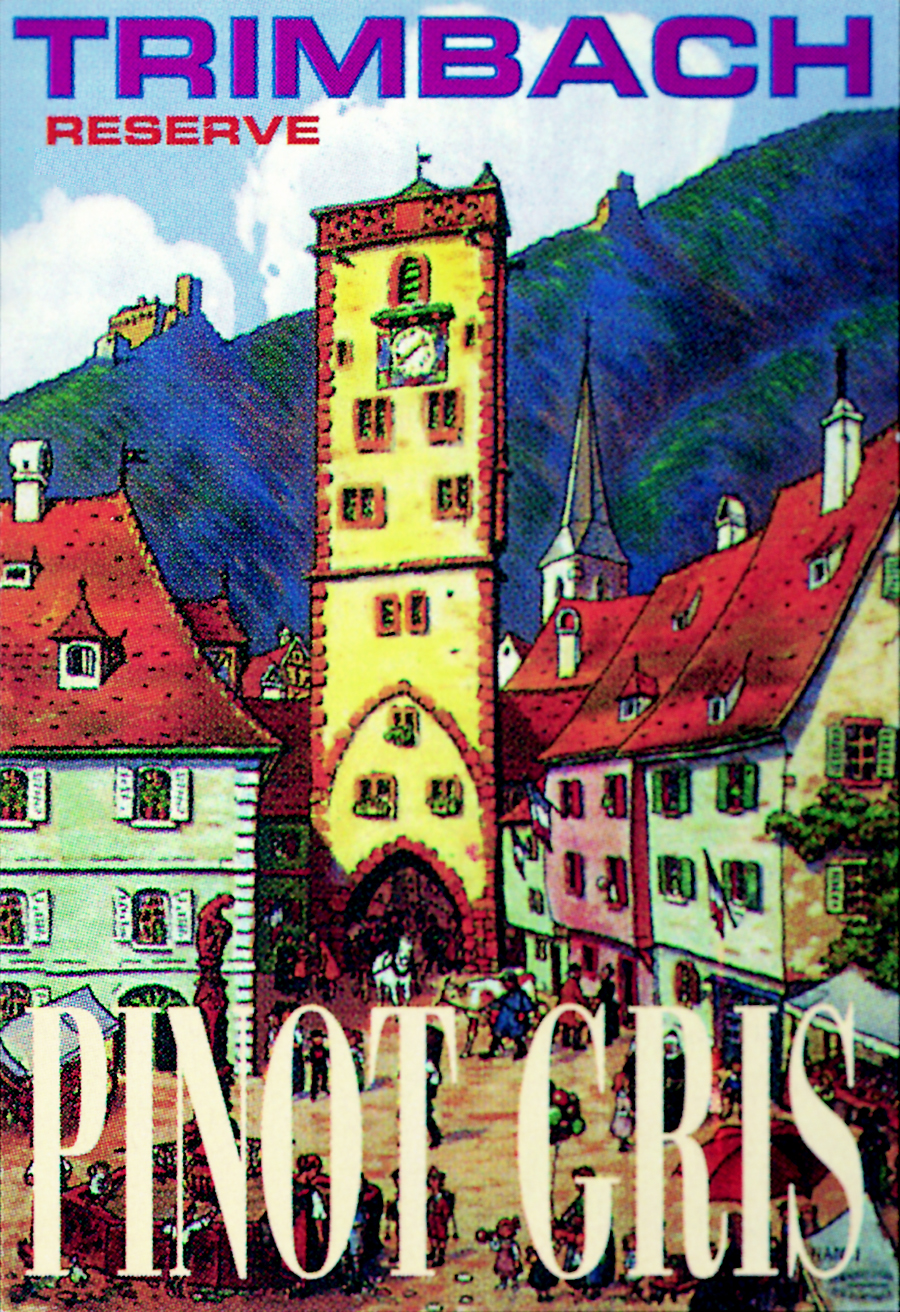
One of the most renowned houses in Alsace, Trimbach was established in 1626 (yes, almost 500 years ago!) and is located in Ribeauvillé, where members of the 12th generation of the Trimbach family - namely brothers Pierre and Jean - manage the company on an everyday basis accompanied by their father Bernard and uncle Hubert. 


Like most wine houses in Alsace, Trimbach produces a wide variety of wines that represent the array of grape varieties in the region. Muscat and Pinot Blanc are produced, but the emphasis is on three varieties: Pinot Gris, Gewurztraminer and Riesling. Several examples of each of these are produced, ranging from a regular bottling to single vineyard offerings.

Along with two friends, I tasted out four Trimbach wines with the Thai food; three Reserve offerings - Pinot Gris, Gewurztraminer and Riesling - along with a special selection Riesling known as Cuvée Frédéric Emile. The Reserve line is really quite notable, especially given that these wines are retail priced at $25 each. The Pinot Gris (2006 vintage) is quite dry with a rich mid-palate and big finish - this is not like most Pinot Gris (or Pinot Grigio) produced elsewhere. The aromas are of dried pear, apple peel and yellow flowers and there is very good acidity. This wine showed very well and can be enjoyed for another 2-3 years.


I adore Gewurztraminer and this 2009 Reserve bottling did nothing to dampen my desire of this variety. The aromas are textbook - lychee and yellow roses - and thankfully, this is not as perfumed as some examples of Gewurztraminer. Medium-full with plenty of appealing spice in the finish, this has lively acidity and is quite forward and even a bit fat on the palate - this is so delicious right now! This wine just jumps out of the glass and welcomes you with its fragrances and spicy flavors and I can't quite figure out how they made a wine this good for only $25!

The 2009 Riesling Reserve is also an excellent wine, but this is a very different style than the Gewurztraminer. While the Gewurztraminer is quite forward, the Riesling is lean and subdued. It's got lively acidity and light touch of minerality (what we used to label as "steely" in a Riesling). There are beautiful aromas of lime, melon and white peach and the wine just sort of glides across your palate, while the finish is long and dry. This is fine now, but it will open up and reveal greater complexities with another 2-3 years and it should still be drinking well in another 5-7 years.


As for the Cuvée Frédéric Emile Riesling (this from the 2005 vintage), this is one of the most distinguished wines from the producer, a selection of grapes from several vineyards including the Grand Cru sites Geisberg and Osterberg. The grapes are picked later than normal, giving them maximum ripeness and flavor, without sacrificing much in the way of acidity and to preserve varietal purity, the wine is aged solely in steel tanks, as the Trimbach brothers believe that wood aging does not add anything to this wine. Medium-full with a rich mid-palate, this has a very long finish with lively acidity and a hint of ginger in the finish to go along with the notes of apricot and chamomile in the aromas. This is a big wine with excellent complexity, yet it is always balanced and never over the top. Showing beautifully now, it should drink well for another 7-10 years. The Cuvée Frédéric Emile is a very limited wine, which helps explain the $75 price.


As for the wine and food pairings, as I wrote above, the white wines of Alsace are classic partners with Thai food and this particular night confirmed that quite well. We ate at Siam Country, one of my favorite BYOB hangouts in Chicago and tried a variety of dishes from spring rolls to satay to ginger pork to chicken with noodles and green curry. Each of the wines worked very well with virtually every dish; particularly good pairings were the Gewurztraminer with the ginger pork, the Pinot Gris with the chicken with green curry and the Riesling with the spring rolls. If I had to choose one or two wines for an entire Thai meal, I'd go with the Riesling and the Gewurztraminer; the former for its richness as well as its subtleties in playing up to the food, while the Gewurztraminer accentuates the spice in the dish. I'm not sure I'd want to play up the heat of a curry dish, so in this instance, the Pinot Gris would be the ideal match, while the Frédéric Emile Riesling clearly could stand up to any of these dishes and was particularly good with any presentation of chicken or pork.

Of course, you don't have to have Thai or Oriental cuisine to enjoy with these Trimbach wines. Many preparations of pork, veal, chicken or vegetables or quiche work beautifully with these wines. That's one of the secrets of the great white wines of Alsace, especially when they are rendered by the Trimbach family!


The wines of Trimbach are imported nationally by Palm Bay.


Friday, January 20, 2012

Slow Wine Tastings


Great news for lovers of Italian wines! Several dozen of Italy's finest producers will be participating in upcoming tastings in New York and Chicago to celebrate the inaugural English language version of the 2012 SlowWine Guide.

The Slow Wine Guide is a new publication that rates Italian wine producers in a slightly different way than most of its other counterparts. There are three ranking determinations used by the authors of the guide: The Snail, which identifies a cellar that has distinguished itself through its wines according to the Slow Food philosophy, The Bottle, given to cellars that show a consistently high quality throughout their range of wines and finally, The Coin, an indicator of great value.

The list of participating producers reads like a Who's Who of Italian Wine Estates. Here is a list of just a few of the producers who will be pouring wine at these tastings:

  • Planeta (Sicily)
  • Antonelli (Umbria)
  • Fattoria Selvapiana (Tuscany)
  • Fattoria di Felsina (Tuscany)
  • Isole e Olena (Tuscany)
  • Luigi Einaudi (Piedmont)
  • Giovanni Rosso (Piedmont)
  • G.D. Vajra (Piedmont)
  • Le Vigne di Zamo (Friuli)
  • Pieropan (Veneto)

The New York trade tasting will be held on Monday, January 30 from 2-6 at the Metropolitan Pavilion at 125 W. 18th Street (there is a press briefing from 1-1:45).

The Chicago trade tasting will be held on Thursday, February 2 from 1:30-5:30 at Spiaggia, 980 N. Michigan Avenue. 

There will also be a tasting for the public in Chicago that same evening from 6:00-8:30 also at Spiaggia. The cost is $30 per person for Slow Food members and $35 for non-members.

For information on how to register go to this page.

Thursday, January 19, 2012

New and Distinct from Italy

Thoughts on some of the most enjoyable - and affordable - Italian wines I've tried over the past few months...

Marchesi Pancrazi S. Donato 2010 (IGT Toscano Rosso)- Think Tuscany and you probably think Sangiovese if it's a red wine, correct? Well so did Vittorio Pancrazi when 3300 vines identified as Sangiovese were planted at his estate in Montemurlo, west of Florence. The trouble was that the vines were actually Pinot Noir, something that was not discovered for more than a decade!

Undaunted, Pancrazi went ahead producing Pinot Noir and has since planted several of the best Dijon clones of this variety. He has also included Pinot Noir on another property of his named San Donato and to accompany that variety, he has also planted Gamay. The result is a delighful wine named S. Donato, a blend of 50% Pinot Noir and 50% Gamay. To make as elegant and as charming as wine as possible, the Pinot Noir is vinified in a traditional way, while the Gamay undergoes carbonic maceration, just as Gamay is treated in Beaujolais. 

This 2010 version is a very appealing wine, full of fresh strawberry and bing cherry aromas and flavors; medium-bodied, this has tangy acidity and very light tannins. It's fine served at room temperature, but I find it even more enjoyable if you chill it for 20 or 30 minutes in the refrigerator before serving. This is a lovely food wine for the next 2-3 years; pair it with an array of things from young cow's cheese to roast chicken in red wine sauce. It's also nicely priced at $19, making this an excellent value. (Imported by Empson, USA)


___________


Donnachiara Greco di Tufo 2010 (DOCG) - Greco di Tufo is one of the great whites of Campania; produced from the Greco grape named for the Greeks who colonized this part of Southern Italy some 2000 years ago. The wine, along with Fiano di Avellino, is produced in the province of Avellino - also known by its historical name of Irpinia - some 25 miles east of Napoli. This version of Greco di Tufo from this excellent producer has every element you'd want to find in this wine. Medium-bodied with beautiful aromas of fresh lemon, quince and magnolia, this is medium-bodied with ideal balance, very good acidity and a long, flavorful finish with a distinct minerality. Enjoy this over the next 2-3 years with  clams, shrimp or scallops. At $20, a wonderful value! (Imported by Michelangelo Selection, Manhasset, NY)


__________


Vistorta Merlot 2007 (IGT Venezia Giulia) - Merlot just doesn't get the respect it deserves these days, be it from California or France. As far as Italy, Merlot is something of an afterthought for most consumers, but there are some famous examples from Tuscany as well some notable versions made in Friuli. One of the loveliest from this northeastern region is the Vistorta bottling from Conte Brandolini d'Adda; this estate located in the province of Pordenone. Medium-full with aromas of red cherry, fennel and thyme, this has a delicate herbal streak that is common with cool-climate Merlot. The tannins are moderate and there is good acidity as well as impressive depth of fruit. Food rounds out this wine quite nicely, especially veal, lamb or an aged cheese. Enjoy this over the next 5-7 years. Very nicely priced at $25. (Imported by Palm Bay)


__________


Bucci Rosso Piceno "Pongelli" 2009 (DOC Rosso Piceno) - For some time now, Bucci has been recognized as one of the premier producers of Verdicchio dei Castelli di Jesi for both its regular and sublime riserva bottlings. But they also produce beautiful red wines from Marche, in this case from the Rosso Piceno zone. The Pongelli is a 50/50 blend of Sangiovese and Montepulciano aged for six months in older oak casks (thus the wood influence is minimal) that is medium-bodied with lovely aromas of bing cherry and strawberry jam. Tannins are moderate, while the acidity is precise and there is very good persistence. This is a nicely balanced, easy to drink wine with a subtle touch of spice; overall the wine offers beautiful complexity. Ideal with pork, veal, beef or pastas with bolognese sauce; it could even work with rich seafood such as tuna or bass. This is a marvelous value at $23. (Imported by Empson USA)