Showing posts with label riesling. Show all posts

Thursday, November 12, 2015

Hugel - The Wines of Alsace (Part Two)


Photo ©Hugel

There are so many days to celebrate, so why not a day for a winery? I never knew this until a few weeks ago, but November 14 is Famile Hugel day - Hugel, being the famed Alsatian producer, of course. 

Well, I'm game, so I tasted a few of their classic wines to get me in the mood. A few words about Hugel first; the firm was established in 1639 (!) and is today located in the charming village of Riquewihr in the Haut-Rhin section of Alsace (this is the southern half of Alsace and is considered the best wine area in the region). The winery is still family owned - how nice in this era of corporate buyouts and mergers - and is being managed by the 12th generation of the Hugel family.

There are several lines of wines produced by Hugel. Here are notes on three wines from the classic range:

2014 "Gentil"
"Gentil" is the name of a blended wine from this house; the wine is primarily Gewurztraminer, backed by smaller amounts of Pinot Gris, Riesling, Muscat and Sylvaner. There are pleasing aromas of Anjou pear along with hints of jasmine and peony. Medium-bodied, this is round with appealing fruitiness, good acidity and has a dry finish with a slightly bitter edge. I'd pair this with crayfish or quiche. The $15 price tag represents a good value.


2013 Riesling
Riesling is considered the jewel of Alsatian wine; for that reason alone, most examples will cost you at least $25, with most priced much higher. Here's one for $13, which is a rarity. It offers subtle notes of pear, elderflowers and a hint of petrol (a classic descriptor for Riesling). It's medium bodied and perhaps a bit shy on the finish, but for a dry Riesling at this price, one that will be even better in another year or two, it's a winner!


2012 Gewurztraminer
Here is the best wine of the four. Offering beautiful varietal aromas of lychee, yellow roses and grapefruit. Medium-full with very good weight on the palate. Very good acidity, impressive persistence, good complexity and excellent varietal character. Enjoy over the next 2-3 years, perhaps longer. Excellent!

If you think about it, November 14, being Famille Hugel day, is just in time for Thanksgiving. All of these wines would work well with your holiday meal, especially the Gewurztraminer with turkey. But if you prefer a more muted aromatic wine, opt for the Riesling or "Gentil" - they work beautifully with turkey, chicken, pork or many other dishes. Happy Holidays!

Friday, March 6, 2015

Riesling Paradise


After reading the headline of this post, chances are you're thinking this is about Germany or Alsace or maybe even the Clare Valley in Australia, as they're all home to great Rieslings. But no, this is about a specific district in the United States where some pretty special Riesling is also produced. This is about Riesling from the Finger Lakes in upper New York; the producer I will talk about today is one the area's finest, Villa Bellangelo.

Wine has been produced in the Finger Lakes since the mid-19th century and today there are almost 100 producers in the area. There are eleven lakes in total that comprise the Finger Lakes, with the two longest being Lake Cayuga and Lake Seneca. About 50 wine firms are in the Seneca Lake area; Villa Bellangelo is a relative newcomer, having been established in 2002. The current owners, the Missick family, took over in 2011 and have remodeled the winery.

There are several varieties produced at Bellangelo, including Chardonnay, Pinot Noir, Merlot and Cabernet Franc. However, their star variety here - as it is throughout the area - is Riesling. I recently tasted three examples of Riesling from Villa Bellangelo and was quite impressed by two of them. Here are notes:

2013 Bellangelo Semi-Dry Riesling
Aromas of yellow peach, apricot and a note of mango. Medium-bodied with very good concentration. Lovely varietal purity, good acidity, ultra clean finish with a light note of sweetness. Beautifully balanced and delicious! Enjoy over the next 2-3 years. $18  Rating: 3 and 1/2 stars (out of five).


2012 Bellangelo Riesling "1866 Reserve"
This is the winery's finest Riesling; the grapes are sourced entirely from a single vineyard (Gibson), situated a bit north of the winery. Attaractive aromas of dried apricot, yellow pear and hyacinth. Medium-full with excellent concentration. Very impressive complexity, ripeness and freshness. Excellent persistence, remarkable balance. Beautifully made wine that is sleek, elegant and displays breeding. Dry finish with notes of spearmint. Enjoy over the next 3-5 years. $32 Rating: 5 stars


This last wine is as fine an American Riesling as I've had in many years! The only American Riesling I've ever tasted that is as complex and varietally pure has been from Stony Hill in Napa Valley, a legendary producer.

Bravo to the team at Villa Bellangelo for these beautiful examples of Riesling!


Note: This is my first post on this blog for some time. I've been recovering from heart surgery and it's been some time since I have had the energy to write. Hopefully, I'll write more posts soon.

Friday, August 1, 2014

Visiting the Rheingau - Part Two


 (Photo ©Tom Hyland)


This is part two of my report on my visit to the Rheingau in early July; part one dealt with Georg Breuer and Leitz. This post is about my time spent touring and tasting wines at two other celebrated estates, Weingut Robert Weil and Weingut Staatsweinguter (Eltville).


Weingut Robert Weil, located in the town of Kiedrich (very near to Eltville) is regarded not only as one of Germany's greatest wine estates, but also one of the world's. In his book Deutschlands Weine 2014, author and one of the leading authorities on German wine, Gerhard Eichelmann lists Weil as only one of four wine estates from the Rheingau as a five-star producer (his top rating). (Eichelmann also rates Leitz and Georg Breuer - two producers I profiled in my previous post - in the same category; the only other Rheingau five-star producer in Eichelmann's book is Weingut Peter Jakob Kuhn).

This was my first experience with the wines of Robert Weil and it didn't take long for me to understand the reason for the high praise. Every wine here, from the basic Riesling to the most exquisite single vineyard offering, is beautifully made with great varietal purity. There is a definite thumbprint with these wines, as they all feature bright fruit with very good acidity- these are vibrant wines. Yes, the style is quite high tone in nature, so that approach is a winning one with both consumers and many critics, but I mention this if only to explain some of the appeal of the wines.

Here are notes on some of the wines I tasted during my visit, arranged from least to most expensive (as well as in terms of large to small production numbers):

2013 Riesling Trocken - This is the entry level wine at Weil; it is categorized as a gutswein (the winery brochure lists this category as "corresponding to the domaine"). Made entirely from Riesling from a few of their best single vineyards, this has delicate peach and apricot aromas with very good acidity - a hallmark of the cool 2013 vintage, one that German winemakers are delighted with - and balance. This actually has just a slight touch of sweetness, but you'd never notice it, when paired with roast chicken or a similar dish. Very tasty and a fine introduction to the Weil style of Riesling. Enjoy over the next 3-5 years.

2013 Kiedricher Riesling Trocken - This is an ortswein, a village wine; the grapes are entirely from three of the winery's vineyards in Kiedrich. Beautiful aromas of yellow peach, kiwi and peony. Medium-full, this has beautiful varietal focus, excellent complexity and a distinct mineral note (this increases as you start to taste the more limited single vineyard wines). This is dry and will drink well for 5-7 years.


Oak casks at Weingut Robert Weil (Photo ©Tom Hyland)


2013 Kiedrich Turmberg Riesling Trocken - This wine is an Erste Lage, a single vineyard that in this instance, the winery compares to a Premier cru (as in the classification of Burgundy in France). While the first two wines described above are fermented and aged in steel tanks, this wine is aged in large casks. The belief here is that this causes a bit of micro-oxygenation in the wines; this along with added texture from the addition of oak, increases the wine's complexity. Beautiful aromas of apricot, lilacs, lemon rind and chamomile. Medium-full with very good concentration; rich mid-palate and a long finish. Distinct minerality with a light nuttiness in the finish. Excellent balance of all components. Outstanding wine- enjoy now or in a decade.

2013 Kiedrich Grafenberg Riesling Trocken "GG" - This Grosse Lage wine is made from Weil's finest vineyard, located just behind the winery. The GG stands for Gross Gewachs, basically meaning Great Growth - think of this as a Grand Cru. GG is a relatively new descriptor for German wines to help identify the greatest vineyards in the country. 

Very enticing aromas of yellow peach, apricot and orange roses - it's difficult to take your nose out of the glass with this wine! Medium-full with excellent concentration; an explosion of fruit on the mid-palate. Outstanding persistence; long, long finish. Ideal harmony, great varietal purity, lively acidity and a light minerality. This wine was also aged in large casks. Outstanding wine - this may be a classic! Best in 7-10 years, though it may age longer.


2013 Kiedrich Grafenberg Riesling Spatlese - Aged in large oak casks, as are all the single vineyard wines; Aromas of tea leaf, apricot pit, yellow peach and eucalyptus. Medium-full with excellent concentration. Long, long finish with a light, pleasing touch of sweetness. Outstanding complexity; great purity. Delicious! Lovely now - this will age for 10-12 years.

2013 Kiedrich Grafenberg Riesling Auslese - Beautiful aromas of ripe apricot, yellow peach and mango. Medium-full with excellent concentration. Rich mid-palate, with layers of flavor. Long, long finish with great persistence; moderate sweetness. Outstanding complexity and balance; this has great finesse and elegance and great varietal character. A great dessert wine! Best in 12-15 years. 


Kloster Eberbach, Eltville (Photo ©Tom Hyland)


After seeing the glistening modern technology at Weil, it was quite a change visiting Kloster Eberbach in nearby Eltville. This site was established in 1136 by Cistercian monks, who produced wine at this facility. While there is a state of the art winery located not too far away, the barrels and press used by the monks for centuries are still present and can be seen on a tour of the Kloster.

At one end of this property, there is a tasting room where today's wine from the Staatsweinguter can be sampled. The Staatsweinguter is the state winery; this particular one is known as Hessische Staatsweinguter, as this particular state in Germany is the Hessische (there is also a state-owned winery at Assmannshausen; this known for Pinot Noir).


Detail of Steinberg Vineyard, Eltville (Photo ©Tom Hyland)


The Staatsweinguter produces wines from several excellent vineyards in the Rheingau, including Rauenthaler Baiken, Erbacher Marcobrun and Rudesheimer Berg Schlossberg, but arguably the most famous is Steinberg, close to the Kloster Eberbach. To say this vineyard has a great deal of history would be an understatement - it was planted in 1239! In the 18th century, walls were built around the vineyard to protect the vines from wild boar and also to act as a wind break. It is the site of some of the greatest German wines over the centuries; this is a monopole of the Staatsweinguter, who proudly call it "Germany's Clos Vougeot!"

Adjacent to the vineyard is an architecturally stunning winery, one of the most up to date and beautiful in the country. A free tour of the winery is available and wisely, the proprietors hand you a glass of three different wines at various stops of the tour. Again, all of this is free - very nice touch!


Detail of new winery at Steinberg (Photo from Kloster Eberbach website)


Here are notes on a few of the best Staatsweinguter wines I sampled during my visit:

2013 Steinberger Riesling Trocken - Aromas of apricot, yellow peach and lilacs. Medium-bodied with very good concentration. Good length in the finish, round and clean with very good Riesling character. Enjoy over the next 2-3 years.

2013 Wiesbadener Neroberg Riesling Trocken - Beautiful aromas of yellow peach, lilacs and a hint of tropical fruit (mango). Medium-bodied with very good varietal purity; very good acidity and a light minerality. Nicely made with very good complexity. Enjoy now or over the next 5 years.

2012 Rudesheimer Berg Schlossberg "GG" Trocken - Intriguing aromas of spearmint, peony and white peach. Medium-full with very good concentration. Rich mid-palate, very good acidity, light minerality. Lovely varietal purity and very appealing - this is quite dry and is delicious! Excellent to outstanding quality. Enjoy over the next 5-7 years - perhaps longer. 

2011 Steinberger Riesling Spatlese - Very floral aromas with notes of yellow peach, magnolia and a hint of apricot. Medium-full with very good concentration. Light sweetness, with lovely balancing acidity and very good complexity. Lovely varietal purity as well as finesse. Excellent. Enjoy over the next 5-7 years.


___


In the next post, a visit to producers in the Rheinhessen.


Tuesday, July 29, 2014

Visting the Rheingau - Part One


Vineyards along the Rhine River across from the town of Bingen (Photo ©Tom Hyland)


It had been far too long a wait, but I finally made it to Germany to visit wine regions. I had been on German soil, so to speak, dozens of times, but it was always to connect to a flight to Italy or back home to Chicago. How nice then that in early July, I was able to land at the Frankfurt airport and head to the baggage claim after having my passport stamped, instead of connecting to another flight!

I visited two regions over the course of three days, the Rheingau and the Rheinhessen, both named for their proximity to the Rhine River. This post will be part one about my time in the Rheingau; I'll write about my experience in the Rheinhessen soon.

While the Rheingau is one of the most famous and certainly one of the very best in terms of wine quality, it's also one of the smallest. The region's vineyards are situated just north of the Rhine River, taking a west to east orientation along the river. The large cities of Wiesbaden (north of the river) and Mainz (south) are at the far eastern boundaries of the region.


Vineyards at Johannisberg (Photo ©Tom Hyland)


The towns that give their names to the most celebrated wines of the Rheingau are quite famous in their own right, names such as Johannisberg, Eltville, Erbach and Rauenthal, to mention just a few. The primary grape here - as it is throughout much of Germany - is Riesling, though the village of Assmannshausen, near the junction of the Rhine and Nahe rivers, is well known for its Pinot Noirs. Some estates also produce smaller amounts of Grauburgunder- aka Grauer Burgunder (Pinot Gris) and Weissburgunder (Pinot Blanc).

I visited four producers during my brief stay. Here are notes on two of these producers and the wines I tasted (I will profile the other two producers in my next post):

Georg Breuer (Rudesheim) - This outstanding estate, founded in 1880, has been owned by the Breuer family since the early 20th century. I met with Theresa Breuer, the granddaughter of Georg, who managed the firm for several decades. 

The wines here are very clean with admirable varietal purity; I was quite impressed with the 2009 Grauer Burgunder, which seemed much younger than five years old. This was a example of this variety with very fine texture, something not seen in most examples. The 2011 Spatburgunder is a pleasant wine with attractive wild cherry and iodine notes; though not meant for cellaring, this is a fine choice for the next 2-3 years.

Of course, it was the Rieslings that stood out here. Especially nice is the 2013 "Charm" Riesling, sourced from grapes from both Rauenthal and Rudesheim. This is a wonderful, absolutely delicious entry level Riesling with notes of white peach, lilacs and a touch of honey. There is very good acidity - a trademark of the very fine 2013 vintage, so this should retain its freshness over the next 3-5 years. It's also a wonderful value, priced at 9.50 Euro; this was a welcome sight, as quality Riesling is not inexpensive to produce, especially in this area.

One of my favorite wines at Breuer was the 2012 Rudesheim Estate Riesling with its inviting yellow peach and apricot aromas (classic Rheingau perfumes) and ripe, almost lush fruit. The wine has lovely complexity, with just a hint of sweetness and very good acidity; look for this wine to drink well for 7-10 years.


Kellerwelt (tasting room) at Breuer


Then it was on to the single vineyard Rieslings at Breuer. The top wines for me were the 2011 Rauenthaler Nonnenberg, a monopole of Breuer and the 2011 Berg Rottland Auslese. The former is designated as Trocken, meaning dry. (This descriptor has been used in conjunction with the praedikat designations of Kabinett and Spatlese, e.g., in the past, but will now be listed by itself,  if at all - see final section of this post below for further explanation).

The Nonnenberg Trocken offers the classic yellow peach and apricot aromas along with a hint of magnolia and has a very rich mid-palate and excellent complexity and a long, long finish. Here is a beautifully precise Riesling that truly speaks of the local terroir - this should age beautifully for 10-12 years.


The Berg (berg simply means "hill") Rottland Auslese has classic Rheingau aromas of apricot along with some tropical notes of mango along with flowery nuances of magnolias and lilacs. Medium-full with excellent concentration, there is also a delicate honeyed character on the palace and in the finish. This has outstanding complexity and a lengthy finish that has moderate sweetness, as there is very good acidity that cleans the palate. This is an outstanding sweet wine which can be enjoyed now, but will reveal greater complexities in 10-12 years.

I also loved their 2006 Brut, a blend of the Pinots - Pinot Gris, Pinot Blanc and Pinot Noir. Most people don't realize that Germany is the world's leading producer of sparkling wine, known as sekt; fewer still realize that most of these wines are made from grapes imported from other countries. Of course, these sparkling wines are for supermarkets; they do not reflect much, if any, character.

Thankfully, there are producers of sparkling wine in Germany that make wine according to the classic method, where the secondary fermentation takes place in the bottle. This is an excellent sparking wine of impressive complexity, very good persistence and style. Quite dry, this is beautifully made and will be a pleasure to drink for the next 3-5 years.


I also enjoyed the wines of Leitz, a small cellar located in Rudesheim, managed by 50 year-old Johannes Leitz, who has been at the helm here since 1985. Today, the firm has 40 hectares (100 acres) of vineyards of some of the most prized sites in the Rheingau.

The first wine I sampled here was the cleverly titled Eins-Zwei-Dry from the 2013 vintage. A trocken Riesling, this is a straightforward and charming wine; Letiz explained the name by telling me that he wanted his customers know that Riesling can be dry (and that he produces one). It's tasty, with simple charms and at 8.50 Euro, it's nicely priced.

The best wines here are quite rich with a distinct minerality that the finest German Rieslings are known for. A first-rate example of that at Leitz - at least for me on this occasion - was the 2013 Rudesheimer Berg Schlossberg Riesling (trocken). This particular site is at the far western end of the Rheingau where the river turns north; the vineyard has a southwestern exposure and sits just a few hundred feet above the river banks.

Along with beautiful aromas of peach, there is also a strong note of flint, derived no doubt from the blue slate soil. Medium-full with excellent concentration, this has rich minerality, big persistence, very good acidity and excellent complexity; this should drink well for 7-10 years.

Even better was the 2012 Rudesheimer Berg Roseneck Riesling Spatlese, a wine with only 8% alcohol. Offering intriguing aromas of petrol, guava and honey, this is a bright and delicious wine with a rich mid-palate, very good acidity and a lengthy finish with just a hint of sweetness. This should be in fine shape for 10-12 years more; in my opinion, this is a classic, first-rate Spatlese.

___


One of the things I learned on this trip was the recent shift as far as labeling German wines. The trend is to move away from the Prädikat designations of the 1971 German wine law; now wines would be named by quality level - entry level, commune (town) wines and finally single vineyard wines (lage). Of this last category, the absolute best vineyards, basically the Grand Cru would be known as Grosse Lage, with a few select wines being classified as Grosses Gewächs (G.G.) - great growths.

Also the term trocken is written on some wines, while not on others; the belief here from producers is that if the wine is not a Spatlese or Auslese, it is dry. Thus in their mind, their wine would not need the term trocken. Yet some producers believe it should be written on a label. 

It's all a bit confusing, even for some Germans that closely follow their country's wines. Hopefully this will all be straightened out soon.

___

Next post on the Rheingau: Robert Weil and Staatsweinguter

Wednesday, July 2, 2014

The Glories of Riesling (Part Three) - The New World


In my two previous posts on Riesling (here and here), I wrote about the two most classic origins of Riesling from the Old World - Germany and Alsace. This post will deal with some favorite examples of Riesling from the New World, namely Australia, New Zealand and California.

Whenever you speak about Riesling, you think of Germany and Alsace for their beautiful expressions of this grape, whether dry or sweet. They have been producing these wines for centuries, so vine age plus knowing the best sites to plant the grape along with experience - the best teacher of all - have combined to make these two areas reference points for Riesling.

I have yet to discover a region or country that produces as many great examples of Riesling as do those two lands, but the Clare Valley in Australia comes close and in my mind, has been the home of some truly classic Rieslings. The finest example of this variety I have had outside of Germany and Alsace has been the Grosset "Polish Hill" from Clare Valley, 100 miles north of Adelaide. I've never enjoyed the good fortune of visiting there, so I have to rely on the firm's website about this wine, which describes the vineyard as having "silt and shallow shales over a thin crust of clay and gravel." Proprietor Jeffrey Grosset has been making this wine since 1981 and I recall quite well the lovely petrol and lime aromas, as well as the richness on the palate and texture of the wine. This is truly a great Riesling.

For this post, I tasted another excellent Clare Valley Riesling from Kilikanoon (review below); I also tasted Rieslings from Western Australia, namely from the Margaret River and Frankland River Regions. The wines I tasted from Leeuwin Estate and Frankland Estate were very different in style, but both excellent. I was particularly pleased with the structure and minerality of the latter's wines.

I was also delighted with another Riesling from Down Under, namely the Greywacke 2011 from the Marlborough district in New Zealand. Greywacke is the winery of Kevin Judd, who achieved fame a while back as being the winemaker at Cloudy Bay. Kevin has always made brilliant examples of Sauvignon Blanc, but his Riesling is just as memorable.


From America, I've been very impressed with the Rieslings from Chateau Ste. Michelle in Washington. There are two principal releases from this producer, one the Cold Creek Vineyard offering and second the Eroica. The Cold Creek Vineyard is planted to numerous varieties - red and white - and it is quite warm, so you might not think a site that is the source for excellent examples of Cabernet Sauvignon, Merlot and Cabernet Franc would be home to lovely Rieslings, but that indeed is the case. The Eroica wine is a collaboration between Chateau Ste. Michelle and famed Mosel producer, Dr. Ernst Loosen. This is a beautiful wine, a Riesling of marvelous complexity and charm.

There are a few beautiful Rieslings from California as well. Mendocino County, north of Sonoma, is a cool climate ideal for this variety; especially recommended are the examples from Handley and Greenwood Ridge from Anderson Valley and Esterlina from Cole Ranch.

As for Napa Valley, Trefethen Vineyards has been producing a delicate, dry Riesling for years and then there is the legendary Stony Hill Riesling, which has become somewhat of a Holy Grail for Riesling lovers.

The Finger Lakes region of upper New York State is home to more than 60 producers of Riesling. There are all styles made here with varying quality levels, but the best are excellent. For this post, I tasted a Riesling from Ravines Wines Cellars and was quite pleased.


Tasting notes:

Australia

Leeuwin Estate Riesling "Art Series" 2013 (Margaret River) - Light yellow; aromas of peony, melon, petrol and elderflowers. Medium-full with very good concentration. Cleanly made, this has impressive persistence and varietal focus. Lengthy finish and lively acidity. This should drink well for another 3-5 years - excellent. ($16, a notable value). Imported by Old Bridge Cellars, Napa, CA.

Frisk "Prickly" Riesling 2013 (Victoria) - I've enjoyed this Riesling for a few years now; the name comes from the fact that the wine has a prickly sensation on your tongue. Pleasing aromas of melon, white peach and elderflowers. Medium-bodied with tasty ripe fruit and a nicely structured finish with tangy acidity. Irresistible now, best fresh, but can be enjoyed over the next 3-5 years. ($10) Imported by Old Bridge Cellars

Kilakanoon Riesling "Mort's Block" 2012 (Clare Valley, Watervale)
Straw/light yellow; delicate aromas of melon, lime and peony. Medium-full with very good concentration. Elegant wine with excellent varietal character. Very good persistence and acidity. Nice typicity - perhaps not as rich as some vintages, but a nice wine for enjoyment now and over the next 2-3 years. ($20) Imported by Old Bridge Cellars.


Frankland Estate Riesling "Netley Road Vineyard" 2012 (Frankland River Riesling, Western Australia): I tasted three different offerings of Riesling from this producer. The first two, the "Poison Hill Vineyard" and the "Isolation Ridge Vineyard" are very good with excellent varietal character and persistence. The "Netley Road" is the finest of the three. Brilliant straw, aromas of petrol, lime and a hint of talc powder. Medium-full with excellent concentration. Rich mid-palate, elegant entry on the palate. Lengthy, well-structured finish with excellent persistence, lively acidity and a delicate streak of minerality. Wonderful complexity and varietal character. Enjoy now (I'd love this paired with crab) or wait for greater complexities to come to the front. Peak drinking in 7-10 years. ($35, only 6000 bottles produced). Imported by Quintessential, Napa, CA.


New Zealand

Greywacke 2011 (Marlborough) - Straw/light yellow; lovely aromas of lime, elderflowers and green apple. Medium-full with very good concentration. Vibrant acidity, excellent persistence and wonderful varietal purity with just a touch of minerality. This was the most delicious Riesling I tasted for this post. I opened it and enjoyed a few ounces each night for more than a week; it was as fresh and as tasty after a week open as it was when I first tasted it. Beautiful wine - well, done Kevin Judd! ($25) Imported by Old Bridge Cellars.


Washington

Chateau Ste. Michelle Riesling "Cold Creek Vineyard" 2012 (Columbia Valley) - Beautiful straw/light yellow with delightful aromas of white peach, apricot, lilacs and chamomile. Medium-bodied with excellent concentration. Generous mid-palate, very good acidity, impressive persistence and ideal varietal purity. Absolutely delicious with perfect balance, this has just a trace of sweetness, which is balanced by the acidity, leaving a clean, satisfying finish. Enjoy over the next 2-3 years - if you can wait that long! ($18, an excellent value). (Information on the wine here).

Chateau Ste. Michelle & Dr. Loosen Riesling "Eroica" 2012 (Columbia Valley) - The grapes for this wine are sourced from eight different vineyards in Washington, including Horse Heaven (Columbia Valley) and Viewcrest (Yakima Valley). Straw; lovely aromas of lime, white peach and a hint of pineapple. Lovely mid-palate and balance - very exquisite - with lovely varietal purity. Very impressive Mosel-styled Riesling with very good acidity and a nice touch of finesse. This is slightly drier than the Ste. Michelle Cold Creek Riesling. Enjoy over the next 2-3 years. ($20, a fine value). (Information on the wine here).


California

Handley Cellars Riesling 2012 (Anderson Valley) - Straw/light yellow; attractive aromas of yellow peach, Anjou pear and magnolias. Medium-bodied, this has good varietal character, good persistence and a lightly sweet, but not cloying finish. A delicate, uncomplicated style of Riesling meant for consumption over the next 1-2 years. ($22) 


New York State

Ravines Wine Cellars Riesling "Argetsinger Vineyard" 2010 (Finger Lakes) - This vineyard was planted 25 years ago and is comprised of limestone soil. Floral aromas - peony and lilacs with a note of honey. Very good concentration and freshness. Very good acidity; off-dry finish. Elegant with a nice sense of finesse. Enjoy over the next 3-5 years. ($25)


Sunday, May 4, 2014

The Glories of Riesling (Part One) - Germany


Vineyard in Germany's Rheingau Region (Photo from Peter Jakob Kühn website)


Recently I wrote a series of posts about Sauvignon Blanc (click here), calling it the "greatest grape." Of course, there is not one grape variety that is the greatest- there are several and Sauvignon Blanc is one of my favorites, if not my single favorite. I did mention Riesling in the first post, noting that there are some important wine writers who label that variety as the world's most accomplished. I love Riesling, but don't get the opportunity to taste as many as I'd like, so I decided it was time to reacquaint myself with the grape. I've tasted a couple dozen wines made from Riesling over the past several weeks and starting with this post, I'll report about these wines. 

One of the reasons I labeled Sauvignon Blanc as the greatest grape was the fact that there are few varieties that display such brilliance in so many regions, be it the Loire Valley from France, Marlborough Valley from New Zealand, San Antonio Valley from Chile as well as a few zones in Washington State, California, Italy and a few others. Given that, Riesling deserves acclaim as well for its performance in so many wine zones around the world, from Germany and Austria to Alsace, Australia, New Zealand as well as California and Washington State.


So let's start with Germany, the cradle of Riesling. There are several major production zones with two most famous being the Mosel and the Rheingau. These zones are in southwestern Germany, with the Mosel - aka Mosel-Saar-Ruwer for the three rivers that define this area - further west. Both zones are imbued with stunning hillside slopes, the better to catch the sun at this far northern latitude.


Generally speaking, the Rieslings from the Mosel tend to be lighter in the mouth than those from the Rhiengau, as wines from this latter zone are generally more lush with apricot and peach flavors. The Mosel Rieslings are often more mineral driven and though not as fat as those from the Rheingau, do offer amazing structure and tremendous cellaring potential. German Rieslings, no matter the origin, are known for their long aging ability, even for the less sweet versions (Kabinett, Trocken), which can still drink well at 7-10 years of age. Then you have wines such as Auslese and sweeter (Beerenauslese, Trockenbeerenauslese) that can drink well for 20-40 years in some instances.

But even for the basic German Rieslings not meant for the long haul, there is a purity of flavor as well as vibrant acidity that defines these wines. It is no wonder then that producers all over the world use Germany as the goal they have in mind when producing their own versions of Riesling.

Here are notes on a few German Rieslings I tasted recently:

2010 Villa Huesgen Kabinett "Feinherb" (Mosel) - Aromas of yellow pear, magnolia and yellow peach. Medium-bodied, this has good varietal character, and is nicely balanced with good acidity. Pleasant and dry, with very good persistence and delicious apricot flavors in the finish. Enjoy over the next 1-2 years. ($38) - Imported by Qunitessential, Napa Ca.

2011 Selbach-Oster Riesling Kabinett (Mosel) - Straw/light yellow; pretty aromas of lime, white peach and lilacs. Medium-bodied with very good concentration. Juicy, lush fruit, good acidity and persistence. Clean with excellent varietal focus. Straightforward, this is a nice exmple of the Mosel style of Riesling; enjoy over the next 2-3 years. ($23) - A Michael Skurnik Selection, Syosset, NY.

2012 Weingut Spreitzer Oestricher Lenchen Kabinett (Rheingau) - Brilliant light yellow with pale green/gold reflections; lovely aromas of white peach, lilacs and chamomile. Medium-full with very good concentration. This is beautifully balanced with lovely vareital purity. The fruit is perfectly ripe with a light juiciness and there is very good cleansing acidity. The finish is dry with very good persistence; this is a delicious wine. Enjoy now and over the next 3-5 years – perhaps longer. At a suggested retail price of $21, this is an excellent value! - Michael Skurnik Selections


2012 Peter Jakob Kühn Oestrich Riesling Trocken "Quarzit"(Rheingau) - This is a biodynamic producer with Demeter certification. Some of the wines are aged in amphora, so the winemaking here is according to a very strict philosophy. That said, these are very distinctive wines and they are not for everyone. Bright yellow; aromas of yellow peach, apricot and daffodil. Medium-full with very good concentration. Round, elegant finish, very good acidity and persistence. Clean and nicely balanced, this ia a well made wine for enjoyment over the next 2-3 years – perhaps longer. ($33) - Imported by Domaine Select Wine Estates, New York City, NY

2010 Peter Jakob Kühn Mittelheim Nikoulas Riesling Trocken (Rheingau) - Bright golden yellow; aromas of apricot, yellow peaches and a hint of saffron. Medium-full with very good concentration. Quite ripe and lush, this is big and perhaps a touch heavy with a dry, slightly bitter finish. A very distinct, unusual style of Riesling. Best over the next 2-3 years. ($55)

2011 Peter Jakob Kühn Oestrich Lenchen Riesling Auslese - Brilliant light yellow; beautiful aromas of ripe apricot, honey and golden apples. Medium-full, this is lush and quite delicious, this has very good acidity, excellent persistence and beautiful varietal purity. This is medium-sweet, so I’d like to see a bit more acidity to balance the finish. Still, this is a lovely wine that should only improve for another 5-7 years. ($65/375 ml - 7.5% alcohol)  


2009 Prinz Von Hessen Riesling Kabinett (Rheingau) - Light yellow; beautiful varietal aromas of yellow peach, Anjou pear and lilacs. Medium-bodied with good persistence, very good acidity and impressive varietal purity. A charming wine that is delicious and easy to drink, this has a delicacy and a nice sense of finesse and freshness to it. Enjoy over the next 2-3 years – perhaps longer.  ($25) Imported by Folio, Napa, CA.

2007 Prinz Von Hessen Johannisberger Klaus Riesling Kabinett Trocken (Rheingau) - Light yellow; pleasing aromas of petrol, mint and jasmine. Medium-full with good concentration. Good ripeness, light earthiness in the finish with good persistence and good acidity. Still displaying good freshness, this will drink well for another 2-3 years. ($30)

2007 Prinz Von Hessen Johannisberger Klaus Riesling First Growth (Rheingau) - Light yellow; aromas of Bosc pear, magnolia and dried pear. Medium-full with very good concentration. Beautifully structured wine; very good acidity, excellent persistence and lovely varietal character. Earthy finish, impressive complexity. Good freshness, enjoy now and over the next 3-5 years. ($60)

2006 Prinz Von Hessen Johannisberger Klaus Riesling Auslese (Rheingau) - Pale yellow – lovely color; aromas of apricot and geranium. Medium-full with excellent concentration, beautifully defined mid-palate. Vibrant, cleansing acidity and excellent persistence. Ultra clean with beautiful varietal character. Delicious now; enjoy over the next 7-10 years. Outstanding! ($50/375 ml).


In part two of this series, a look at Rieslings from Alsace and Austria.
 

Monday, December 2, 2013

Amazlng Alsatians - My Dinner with Gustave


I absolutely love the wines of Alsace and believe that this is the finest collection of white wines in the world; taking into mind the whites from Burgundy as well as Friuli, Alto Adige and Campania in Italy, that's a strong statement, but one in which I'm convinced. Add to that the marvelous array of wines, from Pinot Gris to Riesling to Gewurztraminer as well as a few others (including one red, Pinot Noir) and you've got a collection of wines that can pair up beautifully with a wide range of foodstuffs.

Recently, I tasted through the wines of Gustave Lorentz, an excellent producer situated in Bergheim near the foothills of the Vosges Mountains. The family has been producing wine there since 1836 and today is managed by Georges Lorentz, sixth-generation vintner. They own a total of 85 acres of vineyards of which 34 are Grand Cru, with four at Kanzlerberg and thirty at Altenberg de Bergheim. In 2012, their vineyards were certified organic by Ecocert.

I've tasted a few entry level "reserve" wines from Lorentz over the years - quite often the Pinot Blanc- and have been very happy with the overall balance as well as the typicity of the products. They represent Alsace well and they're also fine values, with the Pinot Blanc coming in around $16 a bottle (sometimes even less).


I recently tasted through six of the current Gustave Lorentz wines at two dinners: one with Thai food - I find that Alsatian wines and Thai food are a match made in heaven - and then with the traditional Thanksgiving turkey and all the trimmings. The opening wine was the Cremant d'Alsace, which is a unique sparkling wine from Alsace. This is made according to the methode champenoise system; the wine is under less pressure than a traditional Champagne, hence the name cremant, translated as "creaming." The Lorentz version is a blend of 1/3 each Chardonnay, Pinot Blanc and Pinot Noir and is a delight. My tasting notes are as follows:

"Delicate yellow, fine perlage; aromas of golden apple peel and a hint of lemon custard. Medium-full with very good concentration. Nicely balanced, very good acidity and very good persistence. Well made, this is a very flavorful cremant that is quite dry; it is also one of the nicest I've had in some time. Enjoy over the next 2-3 years."

I enjoyed this with turkey and the Thai food; it worked well with both, as the acidity and cleanliness of this wine cut through the spice of these foods. The suggested retail is $25.


Lorentz also produces a very nice rosé, made entirely from Pinot Noir. This has a beautiful strawberry color with fresh watermelon and strawberry fruit, very good acidity and impressive depth of fruit. This is quite dry and nicely balanced. It also worked well with turkey (with gravy) and an array of Thai dishes. The suggested retail is $16.


Three other wines that are of excellent quality are the 2011 Gewurztraminer "Reserve", the 2007 Pinot Gris "Schofweg" and the 2008 Riesling "Burg". Gewurztraminer is a specialty in Alsace and it's always been a favorite of mine; this 2011 from Lorentz with its exotic lychee, pineapple and lemon tea aromas and dry finish is first-rate and a wonderful partner for all of the foods I've mentioned in this post. Enjoy this over the next 2-3 years; suggested retail of $25, which is quite fair.

The 2007 Pinot Gris from a single vineyard (an extension of Altenberg) offers inviting flavors and aromas of red apple and oragne peel backed by impressive depth of fruit and a lightly spicy finish; this was especially nice with Thai curry. This has the concentration to drink well for another 5-7 years; this is a delightful wine with a suggested retail of $30.

The 2008 Riesling "Burg," also from a single vineyard, is medium-full with lovely aromas of petrol and apricot (classic for this variety); the finish is long and very dry. 2008 was an excellent vintage in Alsace with expressive aromas and very good natural acidity; though not a year that produced the "biggest" wines, 2008 in Alsace yielded wines of beautiful varietal purity and structure. This is superb at present with pork and lighter game and white meats and should drink well for another 3-5 years, though I may be a bit conservative in that estimate. Riesling is certainly a hallmark of any Alsatian producer's portfolio and this is one that the Lorentz family should be proud of; suggested retail is $30.


Finally, let's talk about the 2006 Gewurztraminer from the Altenberg de Bergheim Grand Cru vineyard (depicted in the above map). The Grand Cru appellation in Alsace was certified in 1975 with many of the first vineyards being designated as such in 1983; there are a total of 51 Grand Cru vineyards in Alsace. Altenberg de Bergheim, located a bit north of the town of Colmar in the Haut-Rhin ("Upper Rhine") section of Alsace is considered an exceptional site for Riesling and Gewurztraminer.

The Gustave Lorentz 2006 Gewurztraminer Grand Cru Altenberg de Bergheim is clearly a wine of great breeding, as you would expect. Light golden yellow with sumptuous aromas of lychee, apricot, mango and white roses - just this description alone makes me want to try this wine! - there is a richness and lushness, even an oiliness on the palate. Full-bodied with outstanding persistence and excellent acidity with ideal ripeness, this is a superb wine; my dining companion at the Thai restaurant (whose name was not Gustave) called this wine a "show stopper" and I heartily agreed. This is so delicious on its own, but it would be a shame to not pair this wine with food; this is perfect with Thai pork or chicken or even duck, while it would show off turkey and lighter game beautifully and would also be ideal with foie gras. This is such a unique wine for so many reasons; it has great complexity and power, yet it is always in balance, while the varietal purity is spectacular. This should drink well for another 7-10 years and the suggested retail price of $50 is quite fair, considering where this wine is from as well as its limited production.


Tasting through a lineup of wines such as these is a great exercise in discovering what the wines of Alsace are all about. Being able to experience such first-class offerings from Gustave Lorentz merely reinforced the marvelous quality of this renowned family producer.


The wines of Gustave Lorentz are imported by Quintessential Wines, Napa, CA.

Saturday, July 13, 2013

Alsatian Riesling - Textbook wines


There are some who will tell you that Riesling is the world's greatest wine grape. I may opt for Sauvignon Blanc or Pinot Noir or Nebbiolo (or even Gewurztraminer when I'm in the mood), but clearly I too feel very strongly about Riesling as the source of so many great wines.

Germany has always been recognized as the spiritual home of Riesling and it's unlikely any country produces as many great examples. Elsewhere, the dry Rieslings from Clare Valley in Australia, with their petrol aromas and racy acidity, are remarkably striking and there are also some beautifully made examples in northern Italy, not only in the northeastern regions of Alto Adige and Friuli, but also in Piemonte (yes, Piemonte).

Let's not forget Alsace, home of some of the most magnificent white wines in the world. Several grapes, such as Pinot Blanc, Muscat and the aforementioned Gewurztraminer vie for top honors in any given year, but it is Riesling that more often than not is regarded as the signature grape of Alsace. This cool area, located in far northeastern France, is ideal for white wines that combine striking aromatics with excellent structure and Riesling performs magnificently here with even the most basic examples drinking well for 2-3 years with many types of foods, while the finest versions offer pleasure for a decade or more.


I recently tasted four Alsatian Rieslings - three from 2011 and one from 2010 - that gave me a better understanding of the status quo of this wine in this zone. 2011 was a very warm year, delivering wines of excellent richness and quality. The acidity levels are slightly lower than in an ideal year such as 2010, so the wines may not age as long as is typical, but as with any wine from any area, one needs to look to the best producers.

2010 was a first-rate year in terms of overall balance. The Rieslings are a bit lighter on the palate than those from 2011, but the aromatics tend to offer greater complexity, while there are better levels of acidity. The 2010s as a rule will tend to age longer than the 2011s, but there are excellent wines from both vintages.

Here are notes on the wines I tasted:

2011 Meyer-Fonné Reserve - Straw-light yellow color; expressive aromas of Bosc pear and chamomile. Medium-full, this has a rich mid-palate, very good acidity and impressive persistence. There are notes of yellow spice in the finish along with a touch of minerality. This is quite dry and has impeccable balance; it is rich with a nice sense of lightness at the same time. Enjoy over the next 2-3 years. This is not a well-known producer, but based on this wine, it should be!

2011 Domaine Weinbach "Cuvée Theo" - While Meyer-Fonné is not a household name among Alsatian producers, Domaine Weinbach, managed by Colette Faller and her daughters, is world famous. Much of this is based on their amazing quality, while some of it derives from the fact that the wines are very rich, in some cases, quite lush on the palate. This "Cuvée Theo" from 2011 is prime evidence of the house style; offering aromas of apricot, Anjou pear and hibiscus, this is very ripe and rich and comes across quite differently on the palate and in the finish than the Meyer-Fonné from the same vintage. That's not to say that one wine is better than another; rather, these two wines are meant for different food preparations, with the Meyer-Fonné arguably a better match for terrines and lighter fish, while the Weinbach seems as if it would be better paired with crab, lobster or even a lighter veal preparation. I don't see much point to aging this wine, so enjoy it now and over the next year or two with food.

2011 Ostertag "Vignoble d'E"- The "E" in this wine's name stands for Epfig, the town around which the various vineyards that are the source of this wine are located. Offering pleasant aromas of lime, chamomile and melon, this is a distinctive wine that combines lovely varietal purity with finesse and charm. This has good natural acidity, excellent persistence and is elegantly styled. I'd love to try this wine with delicious, but uncomplicated dishes such as vegetable terrine or sautéed scallops. André Ostertag is a biodynamic producer who is at the top of his game.

2010 Trimbach Riesling - Trimbach may be the most famous and successful wine estate in Alsace and why not? After all, they've been in business since 1626! This 2010 Riesling is a lovely wine, one that displays beautiful varietal purity and balance with a vibrant finish with lively acidity. Offering aromas and flavors of pear, melon and yellow flowers, this is medium-full with a rich mid-palate and a long finish with excellent persistence. This firm's "Cuvée Frederic Emile" Riesling is an amazing wine that has been recognized as one of Alsace's best examples of this variety, but this classic Riesling is also something very special. Enjoy this over the next 2-5 years with dishes such as pork medallions, roast veal or even Oriental cuisine.


Tuesday, January 24, 2012

Trimbach and Thai Food

Buy fine wine and check out our free shipping deals.


Back in November, I wrote a post about pairing Rosé Champagne with Thai food. I love Rosé Champagne and think it accompanies a wide array of foods, so I'd thought I'd see how well it partnered with Thai cuisine. The results were spectacular- great wines and wonderful food.

As that worked so well, I'm going to take a look at other wines from around the world and see how well they marry with Thai food. So I thought I'd do focus on the wines of Alsace this time around as these whites are recognized as arguably the ideal wines to accompany Thai cuisine. And what better way to do this than to sample this food with the wines of Trimbach?

One of the most renowned houses in Alsace, Trimbach was established in 1626 (yes, almost 500 years ago!) and is located in Ribeauvillé, where members of the 12th generation of the Trimbach family - namely brothers Pierre and Jean - manage the company on an everyday basis accompanied by their father Bernard and uncle Hubert. 


Like most wine houses in Alsace, Trimbach produces a wide variety of wines that represent the array of grape varieties in the region. Muscat and Pinot Blanc are produced, but the emphasis is on three varieties: Pinot Gris, Gewurztraminer and Riesling. Several examples of each of these are produced, ranging from a regular bottling to single vineyard offerings.

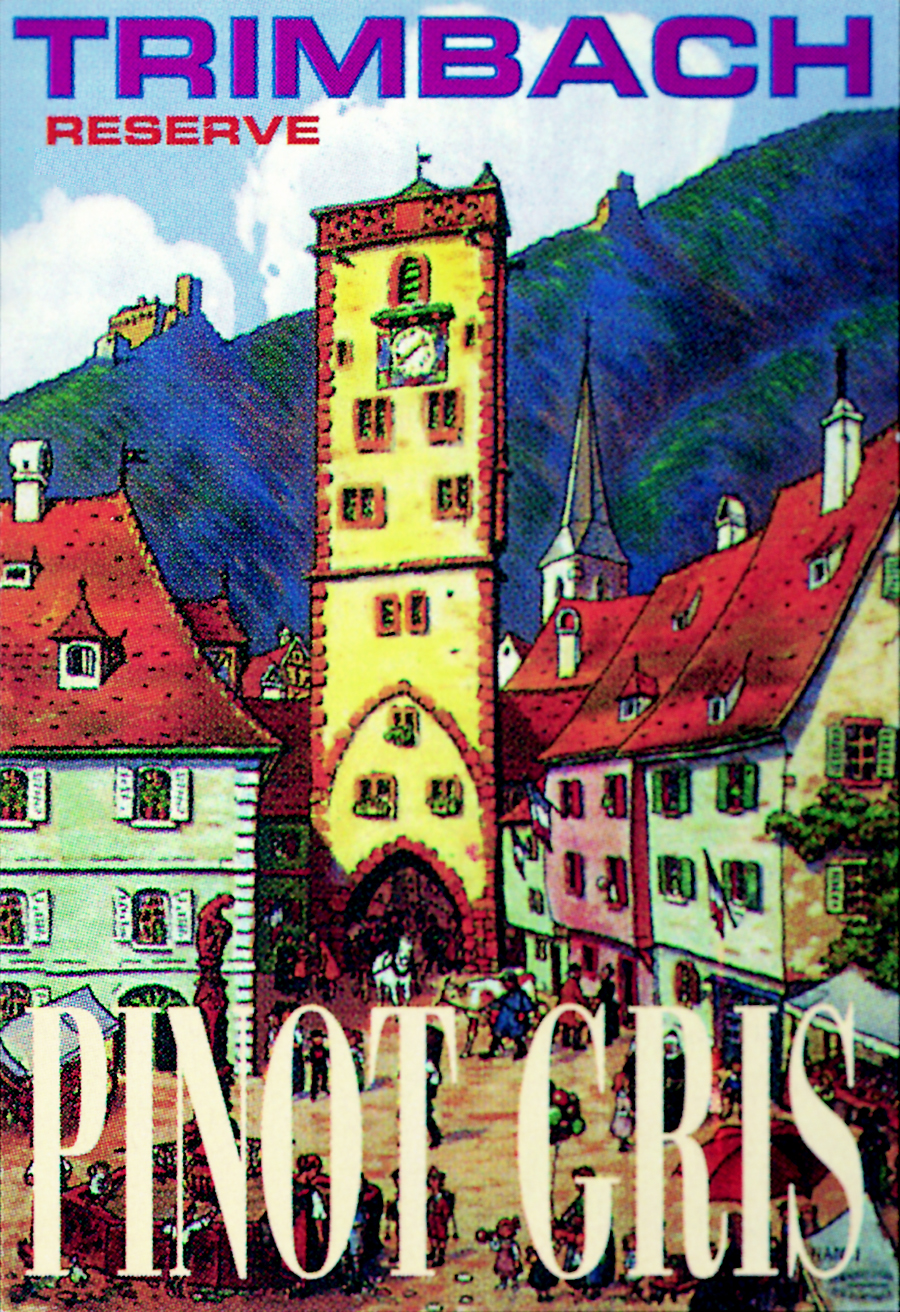
Along with two friends, I tasted out four Trimbach wines with the Thai food; three Reserve offerings - Pinot Gris, Gewurztraminer and Riesling - along with a special selection Riesling known as Cuvée Frédéric Emile. The Reserve line is really quite notable, especially given that these wines are retail priced at $25 each. The Pinot Gris (2006 vintage) is quite dry with a rich mid-palate and big finish - this is not like most Pinot Gris (or Pinot Grigio) produced elsewhere. The aromas are of dried pear, apple peel and yellow flowers and there is very good acidity. This wine showed very well and can be enjoyed for another 2-3 years.


I adore Gewurztraminer and this 2009 Reserve bottling did nothing to dampen my desire of this variety. The aromas are textbook - lychee and yellow roses - and thankfully, this is not as perfumed as some examples of Gewurztraminer. Medium-full with plenty of appealing spice in the finish, this has lively acidity and is quite forward and even a bit fat on the palate - this is so delicious right now! This wine just jumps out of the glass and welcomes you with its fragrances and spicy flavors and I can't quite figure out how they made a wine this good for only $25!

The 2009 Riesling Reserve is also an excellent wine, but this is a very different style than the Gewurztraminer. While the Gewurztraminer is quite forward, the Riesling is lean and subdued. It's got lively acidity and light touch of minerality (what we used to label as "steely" in a Riesling). There are beautiful aromas of lime, melon and white peach and the wine just sort of glides across your palate, while the finish is long and dry. This is fine now, but it will open up and reveal greater complexities with another 2-3 years and it should still be drinking well in another 5-7 years.


As for the Cuvée Frédéric Emile Riesling (this from the 2005 vintage), this is one of the most distinguished wines from the producer, a selection of grapes from several vineyards including the Grand Cru sites Geisberg and Osterberg. The grapes are picked later than normal, giving them maximum ripeness and flavor, without sacrificing much in the way of acidity and to preserve varietal purity, the wine is aged solely in steel tanks, as the Trimbach brothers believe that wood aging does not add anything to this wine. Medium-full with a rich mid-palate, this has a very long finish with lively acidity and a hint of ginger in the finish to go along with the notes of apricot and chamomile in the aromas. This is a big wine with excellent complexity, yet it is always balanced and never over the top. Showing beautifully now, it should drink well for another 7-10 years. The Cuvée Frédéric Emile is a very limited wine, which helps explain the $75 price.


As for the wine and food pairings, as I wrote above, the white wines of Alsace are classic partners with Thai food and this particular night confirmed that quite well. We ate at Siam Country, one of my favorite BYOB hangouts in Chicago and tried a variety of dishes from spring rolls to satay to ginger pork to chicken with noodles and green curry. Each of the wines worked very well with virtually every dish; particularly good pairings were the Gewurztraminer with the ginger pork, the Pinot Gris with the chicken with green curry and the Riesling with the spring rolls. If I had to choose one or two wines for an entire Thai meal, I'd go with the Riesling and the Gewurztraminer; the former for its richness as well as its subtleties in playing up to the food, while the Gewurztraminer accentuates the spice in the dish. I'm not sure I'd want to play up the heat of a curry dish, so in this instance, the Pinot Gris would be the ideal match, while the Frédéric Emile Riesling clearly could stand up to any of these dishes and was particularly good with any presentation of chicken or pork.

Of course, you don't have to have Thai or Oriental cuisine to enjoy with these Trimbach wines. Many preparations of pork, veal, chicken or vegetables or quiche work beautifully with these wines. That's one of the secrets of the great white wines of Alsace, especially when they are rendered by the Trimbach family!


The wines of Trimbach are imported nationally by Palm Bay.