Showing posts with label trimbach. Show all posts

Saturday, July 13, 2013

Alsatian Riesling - Textbook wines


There are some who will tell you that Riesling is the world's greatest wine grape. I may opt for Sauvignon Blanc or Pinot Noir or Nebbiolo (or even Gewurztraminer when I'm in the mood), but clearly I too feel very strongly about Riesling as the source of so many great wines.

Germany has always been recognized as the spiritual home of Riesling and it's unlikely any country produces as many great examples. Elsewhere, the dry Rieslings from Clare Valley in Australia, with their petrol aromas and racy acidity, are remarkably striking and there are also some beautifully made examples in northern Italy, not only in the northeastern regions of Alto Adige and Friuli, but also in Piemonte (yes, Piemonte).

Let's not forget Alsace, home of some of the most magnificent white wines in the world. Several grapes, such as Pinot Blanc, Muscat and the aforementioned Gewurztraminer vie for top honors in any given year, but it is Riesling that more often than not is regarded as the signature grape of Alsace. This cool area, located in far northeastern France, is ideal for white wines that combine striking aromatics with excellent structure and Riesling performs magnificently here with even the most basic examples drinking well for 2-3 years with many types of foods, while the finest versions offer pleasure for a decade or more.


I recently tasted four Alsatian Rieslings - three from 2011 and one from 2010 - that gave me a better understanding of the status quo of this wine in this zone. 2011 was a very warm year, delivering wines of excellent richness and quality. The acidity levels are slightly lower than in an ideal year such as 2010, so the wines may not age as long as is typical, but as with any wine from any area, one needs to look to the best producers.

2010 was a first-rate year in terms of overall balance. The Rieslings are a bit lighter on the palate than those from 2011, but the aromatics tend to offer greater complexity, while there are better levels of acidity. The 2010s as a rule will tend to age longer than the 2011s, but there are excellent wines from both vintages.

Here are notes on the wines I tasted:

2011 Meyer-Fonné Reserve - Straw-light yellow color; expressive aromas of Bosc pear and chamomile. Medium-full, this has a rich mid-palate, very good acidity and impressive persistence. There are notes of yellow spice in the finish along with a touch of minerality. This is quite dry and has impeccable balance; it is rich with a nice sense of lightness at the same time. Enjoy over the next 2-3 years. This is not a well-known producer, but based on this wine, it should be!

2011 Domaine Weinbach "Cuvée Theo" - While Meyer-Fonné is not a household name among Alsatian producers, Domaine Weinbach, managed by Colette Faller and her daughters, is world famous. Much of this is based on their amazing quality, while some of it derives from the fact that the wines are very rich, in some cases, quite lush on the palate. This "Cuvée Theo" from 2011 is prime evidence of the house style; offering aromas of apricot, Anjou pear and hibiscus, this is very ripe and rich and comes across quite differently on the palate and in the finish than the Meyer-Fonné from the same vintage. That's not to say that one wine is better than another; rather, these two wines are meant for different food preparations, with the Meyer-Fonné arguably a better match for terrines and lighter fish, while the Weinbach seems as if it would be better paired with crab, lobster or even a lighter veal preparation. I don't see much point to aging this wine, so enjoy it now and over the next year or two with food.

2011 Ostertag "Vignoble d'E"- The "E" in this wine's name stands for Epfig, the town around which the various vineyards that are the source of this wine are located. Offering pleasant aromas of lime, chamomile and melon, this is a distinctive wine that combines lovely varietal purity with finesse and charm. This has good natural acidity, excellent persistence and is elegantly styled. I'd love to try this wine with delicious, but uncomplicated dishes such as vegetable terrine or sautéed scallops. André Ostertag is a biodynamic producer who is at the top of his game.

2010 Trimbach Riesling - Trimbach may be the most famous and successful wine estate in Alsace and why not? After all, they've been in business since 1626! This 2010 Riesling is a lovely wine, one that displays beautiful varietal purity and balance with a vibrant finish with lively acidity. Offering aromas and flavors of pear, melon and yellow flowers, this is medium-full with a rich mid-palate and a long finish with excellent persistence. This firm's "Cuvée Frederic Emile" Riesling is an amazing wine that has been recognized as one of Alsace's best examples of this variety, but this classic Riesling is also something very special. Enjoy this over the next 2-5 years with dishes such as pork medallions, roast veal or even Oriental cuisine.



Tuesday, January 24, 2012

Trimbach and Thai Food

Buy fine wine and check out our free shipping deals.


Back in November, I wrote a post about pairing Rosé Champagne with Thai food. I love Rosé Champagne and think it accompanies a wide array of foods, so I'd thought I'd see how well it partnered with Thai cuisine. The results were spectacular- great wines and wonderful food.

As that worked so well, I'm going to take a look at other wines from around the world and see how well they marry with Thai food. So I thought I'd do focus on the wines of Alsace this time around as these whites are recognized as arguably the ideal wines to accompany Thai cuisine. And what better way to do this than to sample this food with the wines of Trimbach?

One of the most renowned houses in Alsace, Trimbach was established in 1626 (yes, almost 500 years ago!) and is located in Ribeauvillé, where members of the 12th generation of the Trimbach family - namely brothers Pierre and Jean - manage the company on an everyday basis accompanied by their father Bernard and uncle Hubert. 


Like most wine houses in Alsace, Trimbach produces a wide variety of wines that represent the array of grape varieties in the region. Muscat and Pinot Blanc are produced, but the emphasis is on three varieties: Pinot Gris, Gewurztraminer and Riesling. Several examples of each of these are produced, ranging from a regular bottling to single vineyard offerings.

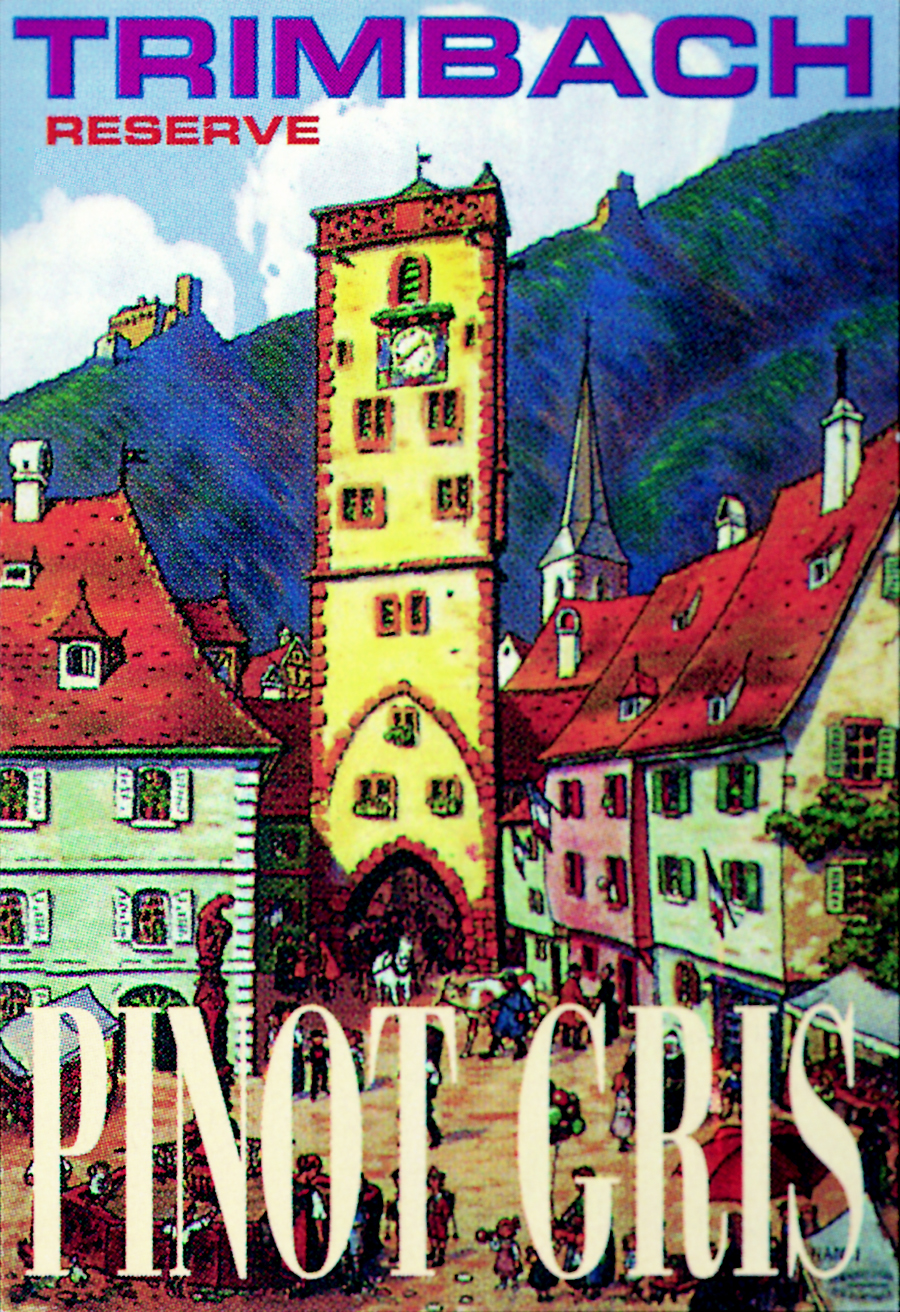
Along with two friends, I tasted out four Trimbach wines with the Thai food; three Reserve offerings - Pinot Gris, Gewurztraminer and Riesling - along with a special selection Riesling known as Cuvée Frédéric Emile. The Reserve line is really quite notable, especially given that these wines are retail priced at $25 each. The Pinot Gris (2006 vintage) is quite dry with a rich mid-palate and big finish - this is not like most Pinot Gris (or Pinot Grigio) produced elsewhere. The aromas are of dried pear, apple peel and yellow flowers and there is very good acidity. This wine showed very well and can be enjoyed for another 2-3 years.


I adore Gewurztraminer and this 2009 Reserve bottling did nothing to dampen my desire of this variety. The aromas are textbook - lychee and yellow roses - and thankfully, this is not as perfumed as some examples of Gewurztraminer. Medium-full with plenty of appealing spice in the finish, this has lively acidity and is quite forward and even a bit fat on the palate - this is so delicious right now! This wine just jumps out of the glass and welcomes you with its fragrances and spicy flavors and I can't quite figure out how they made a wine this good for only $25!

The 2009 Riesling Reserve is also an excellent wine, but this is a very different style than the Gewurztraminer. While the Gewurztraminer is quite forward, the Riesling is lean and subdued. It's got lively acidity and light touch of minerality (what we used to label as "steely" in a Riesling). There are beautiful aromas of lime, melon and white peach and the wine just sort of glides across your palate, while the finish is long and dry. This is fine now, but it will open up and reveal greater complexities with another 2-3 years and it should still be drinking well in another 5-7 years.


As for the Cuvée Frédéric Emile Riesling (this from the 2005 vintage), this is one of the most distinguished wines from the producer, a selection of grapes from several vineyards including the Grand Cru sites Geisberg and Osterberg. The grapes are picked later than normal, giving them maximum ripeness and flavor, without sacrificing much in the way of acidity and to preserve varietal purity, the wine is aged solely in steel tanks, as the Trimbach brothers believe that wood aging does not add anything to this wine. Medium-full with a rich mid-palate, this has a very long finish with lively acidity and a hint of ginger in the finish to go along with the notes of apricot and chamomile in the aromas. This is a big wine with excellent complexity, yet it is always balanced and never over the top. Showing beautifully now, it should drink well for another 7-10 years. The Cuvée Frédéric Emile is a very limited wine, which helps explain the $75 price.


As for the wine and food pairings, as I wrote above, the white wines of Alsace are classic partners with Thai food and this particular night confirmed that quite well. We ate at Siam Country, one of my favorite BYOB hangouts in Chicago and tried a variety of dishes from spring rolls to satay to ginger pork to chicken with noodles and green curry. Each of the wines worked very well with virtually every dish; particularly good pairings were the Gewurztraminer with the ginger pork, the Pinot Gris with the chicken with green curry and the Riesling with the spring rolls. If I had to choose one or two wines for an entire Thai meal, I'd go with the Riesling and the Gewurztraminer; the former for its richness as well as its subtleties in playing up to the food, while the Gewurztraminer accentuates the spice in the dish. I'm not sure I'd want to play up the heat of a curry dish, so in this instance, the Pinot Gris would be the ideal match, while the Frédéric Emile Riesling clearly could stand up to any of these dishes and was particularly good with any presentation of chicken or pork.

Of course, you don't have to have Thai or Oriental cuisine to enjoy with these Trimbach wines. Many preparations of pork, veal, chicken or vegetables or quiche work beautifully with these wines. That's one of the secrets of the great white wines of Alsace, especially when they are rendered by the Trimbach family!


The wines of Trimbach are imported nationally by Palm Bay.