Showing posts with label casablanca valley. Show all posts

Tuesday, December 20, 2011

A Solid One-Two Punch from Carmen


I've thoroughly enjoyed the wines of Carmen, Chile's oldest wine producing company, since I was first introduced to them a little more than a decade ago. From the medium-priced riserva line of wines to the premium Gold Label offerings, this winery has always delivered the goods.

I've recently tried the new releases from Carmen, which have seen a new label design for the Gran Riserva wines as well as a new national importer, Trinchero Wine Estates from California. There are six wines in the Gran Riserva line, which represent Carmen's dedication to the various terriors of Chile. Thus the Chardonnay is made from grapes sourced from Casablanca Valley, while the Sauvignon Blanc is from the cool Leyda Valley, only a few miles from the Pacific Ocean.

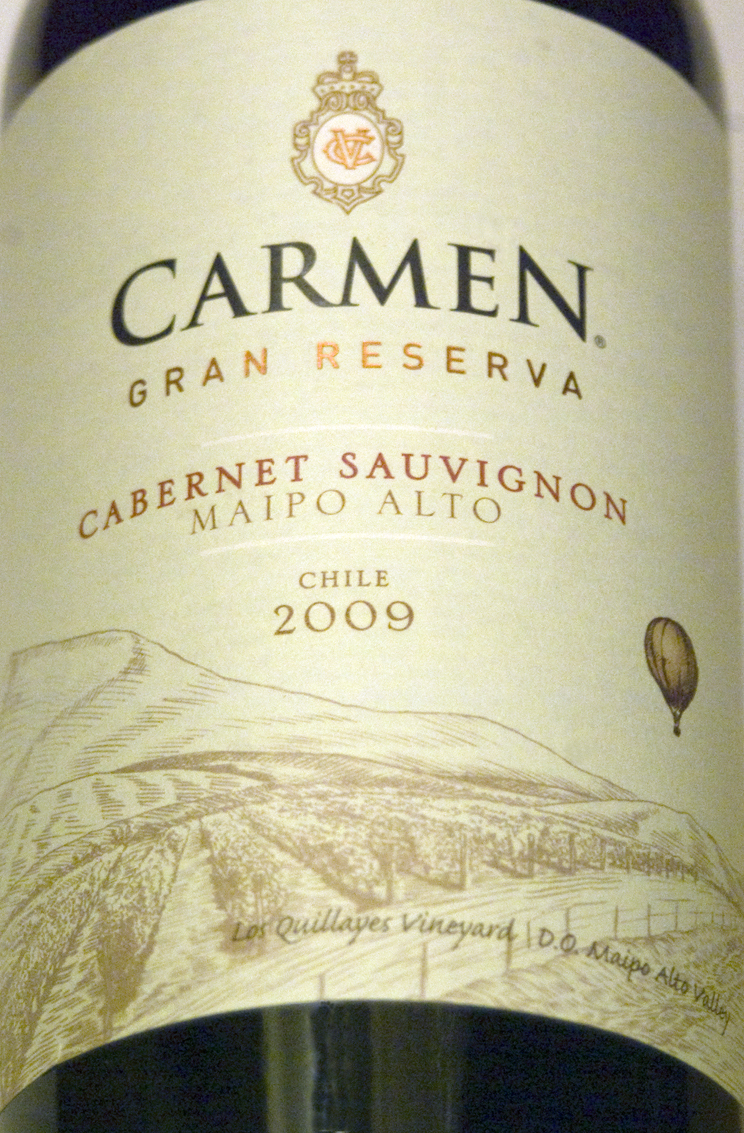
The Carmenere comes from estate vineyards in Colchagua Valley, a few hours south of Santiago, while the other reds (Cabernet Sauvignon, Merlot and Petite Sirah) are all sourced from Carmen's beautiful hillside estate in the Alto Maipo, about a 45-minute drive southeast of Santiago.

My two favorite wines in the Gran Riserva lineup are the Cabernet Sauvignon and the Merlot, both from the 2009 vintage. Of course, the Alto Maipo is famous for Cabernet Sauvignon, as the wines here have good richness, lovely varietal character as well as soft tannins, which gives them an immediate drinkability. This Cabernet Sauvignon has good persistence and balance and along with the textbook varietal flavors of blackcurrant and red cherry, there are also notes of tobacco and dark chocolate.

The Merlot is the real surprise, however. Merlot gets a lot of bad publicity these days for various reasons, but if more were made like this, you'd read a lot more positive notices for the grape variety. Black cherry and black plum fruit dominate this wine and the tannins are polished as you might expect. This is very drinkable now and will be a fine partner for most red meats - especially lamb - for the next 2-3 years. Both of these wines are $15 retail (all the Gran Riserva wines sell at the same price) and these two reds in particular are excellent values.


Carmen has also released the 2007 vintage of their top red, the Gold Label Cabernet Sauvignon. I've been enjoying releases of this wine for the past six or seven vintages and have rated this wine as either excellent or outstanding every year. The wine is made from a beautifully sited vineyard that was planted in 1957; thus this 2007 release is from 50-year old fruit! Yields are low, the fruit is deeply concentrated on the palate and there is excellent persistence. As you might imagine, a wine this rich and young needs a bit of time in the bottle; I enjoyed this for dinner the other night at Al Dente restaurant in Chicago with a pork chop with poblano and red peppers, portobello mushroom and chipotle tomato coulis and as you might imagine, it was a heavenly pairing! The wine definitely needs at least 60-90 minutes of breathing time for enjoyment for dinner tonight; however the wine is just an infant and will improve for another 10-12 years, when it will be at its best.

The price on this gorgeous Maipo Valley Cabernet Sauvignon from Carmen is $50. I can guarantee you that a Cabernet Sauvignon made from 50-year old vineyards in Napa Valley would cost you at least $75 and probably more like $100 or $125 a bottle. This is another excellent value.

Here's to the consistency of Carmen wines, be it at $15 or $50 a bottle. This remains one of Chile's finest producers, I'm quite pleased to say!

Monday, September 26, 2011

Singular Wines from Anakena

Impressive new releases from Chile that I've tasted recently include two wines from the Single Vineyard line from Anakena Winery. Located in the Rapel Valley, the winery has vineyards in several areas of the country, including Cachapoal, Leyda and Colchagua Valleys.

There are several lines of Anakena wines from the basic Varietal wines to the premium Ona wines, small lot bottlings that include Pinot Noir, Syrah and blends including Riesling/Viognier/Chardonnay and Cabernet Sauvignon/Carmenere/Syrah.

Here are notes on two bottlings from the Single Vineyard series- both are suggested retail price of $14 on US retail shelves:

2010 Anakena Sauvignon Blanc Single Vineyard "Yunco Plot" (Casablanca Valley)
Located west of Santiago, Casablanca Valley is a cool climate zone not far from the Pacific Ocean; first planted in the 1980s, it is an ideal spot for varieties such as Pinot Noir, Chardonnay, Riesling and Sauvignon Blanc. Pleasing varietal aromas of spearmint, gooseberry and freshly cut hay. Medium-bodied, this has an elegant entry on the palate along with good acidity and subtle herbal notes in the finish. This is a nicely made cool-climate Sauvignon Blanc. Enjoy over the next year with shellfish or lighter chicken dishes.

2010 Anakena Carmenere Single Vineyard "Malva Plot" (D.O. Peumo)
The Peumo appellation is located in the western reaches of the Cachapoal Valley in western central Chile. Bright purple with inviting aromas of black raspberry, mocha, nutmeg and vanilla. Medium-bodied with very good concentration. Fresh and quite tasty, this is a delicious wine with well-defined varietal character, good acidity, round tannins and a distinct spiciness in the finish with notes of black pepper and cumin. Very appealing now and over the next 1-2 years. Very good value.

A few additional words on this wine. If you like Malbec from Argentina, with its spicy, peppery qualities, you'll love this wine. At $14, this delivers a lot of character and pleasure and is better than most examples of Malbec at this price. If I was purchasing wine for a steak house, I'd buy multiple cases of this wine, pour it by the glass and then watch the patrons enjoy themselves, especially as they order a second glass. It's that good! (This would also make for a wonderful everyday red for many consumers - pair it with barbecued ribs, pork chops, steaks or roasts.)


Thursday, September 1, 2011

Value and Character - the Chilean Way


After a hot July and August, I've returned to trying wines again. A number of reasonably priced Chilean wines have come across my desk lately and I've been especially impressed with two - one white and one red.

The white is the 2010 William Cole Sauvignon Blanc "Columbine Special Reserve" from Casablanca Valley. This wine region has become one of the leading in Chile for production of cool climate varieties, especially Pinot Noir and Chardonnay. But other varieties, such as Syrah, Riesling and Sauvignon Blanc are also playing an important role here as well.

I've always liked William Cole's wines and have especially loved his price points, which are generally in the mid-teens. I can't say that I've always been wild about the wines, as some of them are pleasant, if a bit straightforward. But with this Sauvignon Blanc, Cole has really delivered a lot of character for not a lot of money. The wine has beautiful varietal aromas of freshly cut hay, so you immediately know it's a Sauvignon Blanc that plays it straight ahead; this is not a Sauvignon Blanc pretending to be a Chardonnay.

Medium-full and aged only in stainless steel, so as to highlight the grape's fruit character, the wine has tangy acidity and notes of fresh lime in the finish. I've enjoyed it with everything from pork fried rice to sautéed shrimp and think how perfect this would be with a fish preparation with lime sauce, such as ceviché! Best yet, the US retail price is $15 and believe me, there's an awful lot of character for the money. This is a cool climate Sauvignon Blanc that many producers in Chile make so well- the acidity keeps the wine fresh and overall the wine has a delicate feel on the palate, while still displaying nice texture. Well done, Mr. Cole!


The second wine is the 2010 Meli Carignan from Maule Valley. Maule is located further south in Chile and there are plenty of old vines here planted to Cabernet Sauvignon, Merlot and Carmenere, although white varieties such as Chardonnay and Sauvignon Blanc are also an integral part of this landscape.

Meli produces a Carignan, a grape most commonly associated with Southern France. What's distinctive about this wine are not only the moderate tannins (especially compared to Cabernet Sauvignon), but also its currant and red plum flavors - this is not a big, super ripe jammy red that is too often produced around the world these days. Rather, this is a subdued red, medium full with a light peppery note in the finish and good acidity, meaning the wine has a freshness and edge that makes it a wonderful food wine. Pepper steak would be a perfect match, as would lighter game birds or even something as simple as a chicken or pork taco or empanada. The price on this wine is also $15.

Both wines are imported by Global Vineyard Wine Importers of Berkeley, CA

Thursday, April 14, 2011

Perfecting Pinot Noir in Chile


For decades now, vintners in Chile have known the benefit of the warmth of the sun. Theirs is a moderate to warm climate, meaning that conditions are ideal for varieties such as Cabernet Sauvignon, Cabernet Franc, Merlot and their local grape, Carmenere. The country's finest reds have been made from these varieties, from areas such as Maipo Valley (especially the Alto Maipo, a bit southeast of Santiago), Colchagua and Aconcagua Valleys.

But there are a few dozen producers that have wanted to scratch an itch for years and that itch is working with cool climate varieties, especially Pinot Noir, Chardonnay, Riesling and Syrah. It all started in the 1980s when Pablo Morandé planted several varieties in Casablanca Valley some 12-15 miles from the Pacific Ocean. He took the chance, it paid off with many lovely wines and today, there are many established wine estates in Casablanca, while many other source fruit from this zone.

About a decade ago, a few more intrepid producers ventured even farther west, planting Pinot Noir, Syrah, Sauvignon Blanc, Chardonnay, Riesling and one or two other varieties in the Leyda and San Antonio Valleys. These wine zones are extremely close to the Pacific, with some vineyards as close as 2-5 miles from the ocean. This is a razor's edge climate, so ripening it sometimes difficult, but when it works, it does so brilliantly.

To date, I've tasted some lovely Pinot Noirs from San Antonio and Leyda, most notably from Casa Marin as well as Leyda Vineyards. I've also tasted some beautiful examples from Morandé and William Cole in Casablanca. However, I've also had some bottlings from these zones that have been disappoining, ranging from overripe to underipe to harsh and slightly bitter. It's clear that while Chilean Pinot Noir has improved dramatically over the past two decades, much works needs to be done.


I recently tasted three fine examples of Chilean Pinot Noir that I'll mention in brief.

The first was the Valdivieso Reserva 2009 from Casablanca Valley. My notes mention "fresh, attractive aromas of bing cherry along with a note of cardamom spice; medium-bodied, this has good concentration and varietal character, medium-weight tannins, tart acidity and a light touch of wood."

This is an elegant Pinot Noir that is styled for many types of food and is fairly priced at $17. I think most consumers looking for Pinot Noir in this price range would be very happy with this wine.


The second wine was the Veramonte "Ritual" 2009 from Casablanca Valley. I've enjoyed this winery's bottlings for many years now, be it the delightful Sauvignon Blanc or the red blend known as Primus. The wines are well made and offer very good to excellent character for their prices.

But as good as those wines are, they did not prepare me for the qualities, complexities and character of this new Pinot Noir. Displaying aromas of bing cherry, cardamom and a hint of bacon fat, this wine has delicious varietal fruit with perfect ripeness and a lovely elegance. The finish has good length and is quite flavorful and everything is in balance- the acidity is very good, tannins are round and silky and the wood notes are quite subtle.

For $20 retail, this is a steal. I would be happy to pay $30 for this, as here is a wine with beautiful varietal character, lovely texture and impeccable balance. I've tasted $40 and $50 Pinot Noirs from other countries that haven't had this sort of complexity and finesse. Best yet, this is a lovely food wine - I think it would pair especially well with a Thai preparation of chicken or pork.

Finally, I sampled the Cono Sur "Ocio" 2008 from Casablanca Valley. This producer has a series of special selection and single vineyard wines that have greatly impressed me in the past (especially the "20 Barrels" Sauvignon Blanc). This Pinot Noir has lovely varietal character, excellent depth of fruit and a velvety feel in the mouth. It is quite rich with beautiful ripeness, very good acidity and excellent persistence.

The only problem I have with this wine is the excessive oak; the wine was aged for one year in small oak barrels. Oak in Pinot Noir is a delicate thing and it doesn't take much for a wine to be laden with wood notes. I prefer a different approach to aging a glorious wine such as this in oak, but the winemaker was looking for a particular style. This approach is also taken with numerous vintners of showcase Pinot Noirs in California and Oregon, so this wine is not alone in its balance of fruit and oak. Besides, the wine still has an elegant feel to it; there are no bitter wood tannins present.

This is a trophy wine, so to speak, and is a fine example of what Chile can produce with Pinot Noir. Producing notable wines from this grape is a work in progress in many great areas around the world, even in superb zones like Sta. Rita Hills or the Santa Lucia Highlands in California, so Chile is holding its own with the variety. Based on these three wines, the future looks exciting for Pinot Noir in Chile.


P.S. A final note- the Cono Sur bottling retails for $65, this price no doubt due to its limited availability. But for me, I'll take three bottles of the Veramonte "Ritual" over one bottle of the Cono Sur bottling every time!

Tuesday, November 17, 2009

Values from Chile

Sign identifying Sauvignon Blanc Clone 242 in a Leyda Valley vineyard
(Photo ©Tom Hyland)


I love the wines of Chile and I’ve done my share of writing about the qualities of this country’s efforts, especially with the vibrant white wines of San Antonio and Leyda as well as the gorgeous reds from Maipo and Colchagua Valleys. These wines represent the upper tier of Chile’s wines and frankly are not as well-known as they should be.

What everyone knows about Chile are the moderately priced wines that are well made and offer fine values. While I don’t want to perpetuate a myth that Chile only produces these values offerings, well, I don’t want to dismiss these wines either, especially today, when so many people have to save money to make it through difficult times. So here is a brief list of some notable values from Chile.


2008 Leyda Sauvignon Blanc “Classic” (Leyda Valley)
Close by the Pacific Ocean, San Antonio Valley and the sub-zone Leyda Valley have become the home of some amazing examples of Sauvignon Blanc. Here is one of the finest values from this area; a wine that offers aromas of grapefruit and Anjou pear, has good richness along with lively acidity and textbook varietal flavors. A great match for shrimp and clams, this is a great way to discover the characteristics of Sauvignon Blanc from Leyda Valley and is an amazing value at $12! I can’t imagine a better example of Sauvignon Blanc for the price from anywhere in the world.

2008 Carmen Sauvignon Blanc Reserva (Casablanca Valley)
This has been one of my favorite Chilean Sauvignon Blancs for some time and the 2008 is another lovely bottling. This has a nice note of spearmint along with flavors of lime and grapefruit and is very round and elegant in the finish with cleansing acidity and excellent depth of fruit. Drink over the next 2-3 years with sautéed shrimp or risotto. ($16)

2008 Santa Rita Chardonnay “Medalla Real” (Limarí Valley)
The grapes for this wine come from the cool northwestern zone of Limarí Valley, only a few miles from the Pacific Ocean. Beautiful lemon custard, spiced pear and ginger aromas with tropical fruit flavors on the palate, this is quite rich with nicely integrated oak and a rich, lightly spicy finish. Enjoy over the next 2-3 years with a variety of seafood, from tilapia to sea bass. ($16)

2007 Calcu (Colchagua Valley)
Here is an excellent blended red from Colchagua Valley, home to so many flavorful, bold offerings. A mix of 50% Cabernet Sauvignon, 30% Carmenere, 15% Cabernet Franc and 5% Petit Verdot, this has plenty of red cherry and currant fruit along with notes of red pepper. Medium-bodied with tart acidity, this has moderate tannins and a clean, round finish. A fine match for most red meats or stews over the next 2-3 years. A steal at $12!

2007 Ventisquero Cabernet Sauvignon/Carmenere (Colchagua)
This blend of 70% Cabernet Sauvignon/30% Carmenere is a nicely balaned, middle-weight red with red cherry, cedar and sage aromas. This is not a powerhouse, but a nicely styled, subtle offering for foods such as pork chops, grilled meats or ligher game over the next 2-3 years. ($12)

2005 Maycas Cabernet Sauvignon (Limarí Valley)
At $23, this is priced higher than some consumers want to spend for a value wine, but to me that word is relative; this is a wonderful value. Deep ruby red, this has perfectly ripe black currant fruit with notes of menthol and subtle oak. The tannins are refined and ultra smooth, giving this wine a graceful and elegant finish. This has ideal strucure for aging another 5-7 years (or perhaps even longer). While filet is a natural match, I love this with roast duck, especially with the big fruit flavors of this wine. Mouthfilling and delicious, this is a great success and proof that a cool climate such as Limarí can be an ideal zone for Cabernet Sauvignon.

Thursday, July 23, 2009

Chilean Sauvignon Blanc- Reaching Greatness

Sauvignon Blanc Vineyard of Santa Rita, Leyda Valley
(Photo ©Tom Hyland)


In the July 22 edition of the New York Times, Eric Asimov contributed a column entitled, “Summer’s Background Music.” Asimov, an excellent wine writer who doesn’t take himself or his subject too seriously, wrote about the simple pleasure of South American Sauvignon Blancs (primarily offerings from Chile) and how these attractively priced wines (many less than $16) make for nice “summer sippers.”

The article is fine and it gives readers a shopping list of some very good Chilean Sauvignon Blancs, many from the cool climate areas of Casablanca and San Antonio Valleys. Yet I have to take Asimov to task a bit here for what he did not say in the article.

Basically, what many consumers will take away from this article is that Chilean Sauvignon Blancs are nice wines, but little more than summer sippers. Yes, there are many examples of well made bottlings of this type of wine from Chile that are priced between $10-15 that are ideal for lighter fare and should be consumed sooner than later. Examples of this include the Montes and Veramonte, which scored well in the paper’s tastings as well as the Santa Rita 120 (I have no idea if this was one of the 20 wines tasted or not).

But one of the most exciting developments in the wine industry over the past five to seven years has been the dramatic increase in complexity and quality of Chilean Sauvignon Blancs. In fact, Sauvignon Blancs from the Southern Hemisphere have been quite a revelation lately, especially those from New Zealand (duly noted about everywhere) and South Africa.

Vintners in Chile have taken their game to the next level over the past decade, as they have begun to search for the proper microclimates in which to plant particular varieties. In this respect, they are similar to the vintners of California in the early 1990s, when areas such as the Santa Lucia Highlands in Monterey and Sta. Rita Hills in Santa Barbara County were targeted for Pinot Noir; these are now two of the most sought-after areas for this variety in California. (This is just one example- there are many in California and elsewhere.)

The same is now true in Chile, as Sauvignon Blanc is now being planted in the cool zones of Casablanca, Leyda and San Antonio Valleys. These valleys are west of Santiago and thus much closer to the Pacific Ocean, meaning the hot Chilean sun that ripens the grapes is moderated by the coastal breezes. Thus an ideal mix for Sauvignon Blanc with great flavor as well as vibrant acidity.

The Casablanca examples from wineries such as Pablo Morandé, Kingston, Santa Rita and Carmen are first-rate, offering lovely melon and spearmint fruit, usually unhindered by oak. These are from excellent sites and are farmed to low yields in order to increase concentration; while these are approachable upon release, these tend to drink well for 3-5 years.

The best examples from San Antonio and Leyda are the real revelations of Chilean Sauvignon Blanc, as they are quite intense and offer beautifully structured finishes and lovely complexity. These characteristics come from the fact that yields here are generally quite low (less than 3 tons per acre and often less) and that the vineyards are within five miles of the Pacific. In fact, the Sauvginon Blanc vineyards of Casa Marin are within 2 miles of the ocean; she told me that others thought she was crazy to do this, but she has persisted and has become one of the world’s great producers of Sauvignon Blancs.

The EQ from Matetic and the Casa Marin “Cipreses Vineyard” Sauvignon Blanc were tasted for the Times article and did score well. It’s great that these wines were included, if only to give them some notoriety. But I think that including them in a “summer sipper” article does these wines a great injustice. I actually have to wonder why the Casa Marin “Cipreses” bottling was included, as this is anything but a light, refreshing sipper. This is an intensely flavored, assertive, layered Sauvignon Blanc with piercing acidity and a lengthy finish. I think of summer sippers as something to accompany lighter fare, such as salads or simple sautéed shrimp, while this Casa Marin bottling is big enough to stand up to halibut, sea bass and even roasted chicken or pork medallions.

Maria Luz Marin has been producing this wine since 2003 from her vineyards and the style today if anything is a touch lighter than at first (she admitted to me that the initial 2003 offering was “too much”). In fact, if one were to choose a Casa Marin Sauvignon Blanc for a tasting like the Times organized, the proper choice would have been the “Laurel Vineyard” bottling, which is more fruit-oriented and less forceful than the “Cipreses,” although it is still a big, complex wine. (I wonder if Tasting Coordinator Bernard Kirsch knew this when he selected the wines for this grouping.) I also think that the relatively conservative rating of 2 and 1/2 stars for this wine had to do with the fact that it is so robust in style; after all, if you’re looking for a summer sipper, you’re bound to be thrown for a loop with a wine like this.

For my own evidence, I tasted several excellent to outstanding Chilean Sauvignon Blancs on a recent trip there. Tasting notes are below. I had tasted most of these before and had fallen in love with the overall quality and distinctive style of these wines. On this trip I also discovered a great wine from a relatively new project called Maycas, produced by Concha y Toro from grapes in the northern region of Limarí Valley. There are a few other excellent Sauvignon Blancs from here, especially Tabalí, while Santa Rita has recently planted the variety here for their Sauvignon Blanc program. The Maycas is extraordinary Sauvignon Blanc (both the 2007 and the currently available 2008) and is a steal at $21.


Chilean Sauvignon Blanc

2008 Santa Rita “Medalla Real” (Valle de Leyda)
Aromas of melon, bell pepper and Bosc pear; medium-full with a beautiful texture on the palate. Very good acidity and excellent fruit persistence. Quite delicious with wonderful complexity. These vineyards are only five miles from the Pacific Ocean and are quite shallow, ensuring low yields. Enjoy over the next 3-5 years. ($16) Excellent

2008 Carmen Reserve (Casablanca Valley)
Rich aromas of spearmint, lime and grapefruit – nice varietal intensity. Medium-full, this has beautiful acidity and a light herbal touch. Quite delicious! Enjoy over the next 2-3 years. ($16) Excellent

2008 Maycas (Limarí Valley)
Intense aromas of green pepper, asparagus and spearmint. Medium-full with excellent concentration. Rich, generous mid-palate; long finish with vibrant acidity and beautiful fruit persistence. Gorgeous wine with great varietal character. Enjoy over the next 2-3 years. ($23) Outstanding

2008 Casa Marin “Laurel Vineyard” (San Antonio Valley)
Beautiful aromas of gooseberry, lime and grapefruit. Medium-full with excellent concentration. Vibrant acidity and a long, beautifully structured finish with great fruit persistence. Lovely wine with great varietal purity. Enjoy over the next 3-5 years. ($28) Oustanding

2008 Casa Marin “Cipreses Vineyard” (San Antonio Valley)
Persistent aromas of gooseberry and bell pepper. Medium-full with excellent concentration. Vibrant acidity and a long finish with excellent fruit persistence. This is an assertive style of Sauvignon Blanc and compares favorably with many of the top Sancerres and bottlings from New Zealand. This vineyard is less than two miles from the ocean- a razor’s edge climate that provides great intensity and pronounced aromatics. Enjoy over the next 3-5 years. ($28) Oustanding

Casa Marin Sauvignon Blanc - Laurel and Cipreses Vineyards (Photo ©Tom Hyland)


I also recently tasted the 2006 Cono Sur “20 Barrels” from Casablanca Valley. Offering aromas of spearmint, honeydew melon and dried yellow flowers, this has great texture and richness on the palate and is aging beautifully; it’s great now and should offer pleasure for another two years or so. There are many more wonderful Sauvignon Blancs from Chile I’m excited to try- consumers should do the same!

Finally, a note to Eric Asimov. Having read your column for some time now, I know you love Sauvignon Blanc and I've enjoyed your defense of this grape with excellent columns on Sancerre and New Zealand. I hope you’ll try more of these upper tier Sauvignon Blancs from Chile and write an article about them. I’d love to see you spread the word that these wines are certainly more then refreshing offerings for warm weather - they’re among the finest white wines made today!